

You finish your teacher training. You've got the certificate, the mat still smells faintly of the studio you trained in, and you're feeling more confident than you have in months. Then you apply for your first teaching job, and somewhere in the interview, the studio manager asks, "So is that certification Yoga Alliance registered?" and suddenly you're not sure if the answer matters, or if you even know the answer.
If that scenario sounds familiar, or you're trying to avoid it before you've even booked a training, this post is for you. Not the marketing-brochure version of "which certification is best," but the honest, slightly less glamorous answer: what employers are actually checking when they look at your credentials, and why.
Why "Certified" Doesn't Mean One Single Thing
Here's the part that trips a lot of new teachers up: yoga teaching isn't a licensed profession. There's no government board, no national exam, no single authority that decides who is legally allowed to call themselves a yoga teacher. Unlike becoming a nurse or an electrician, where a specific license is legally required before you can work, anyone can technically print a certificate and call it a "200-hour certification."
That freedom is part of what makes yoga so accessible as a teaching path — but it's also exactly why the certification landscape is so crowded and confusing. Because there's no single gatekeeper, dozens of organizations, schools, and studios have created their own version of "certified," and they don't all carry the same weight.
This is why employers — studio owners, gym chains, retreat companies, wellness centers — have had to develop their own informal filters for figuring out who's actually trained well versus who just has a nice-looking certificate. Understanding those filters is the real key to this whole question.
Also Read: Yoga for Beginners: 10 Poses, Breathing & First Week Tips

What Yoga Alliance Actually Is (And Isn't)
Yoga Alliance is probably the name you've seen most often if you've done any research into teacher training. It's worth being precise about what it actually is, because a lot of the confusion around it comes from people misunderstanding its role.
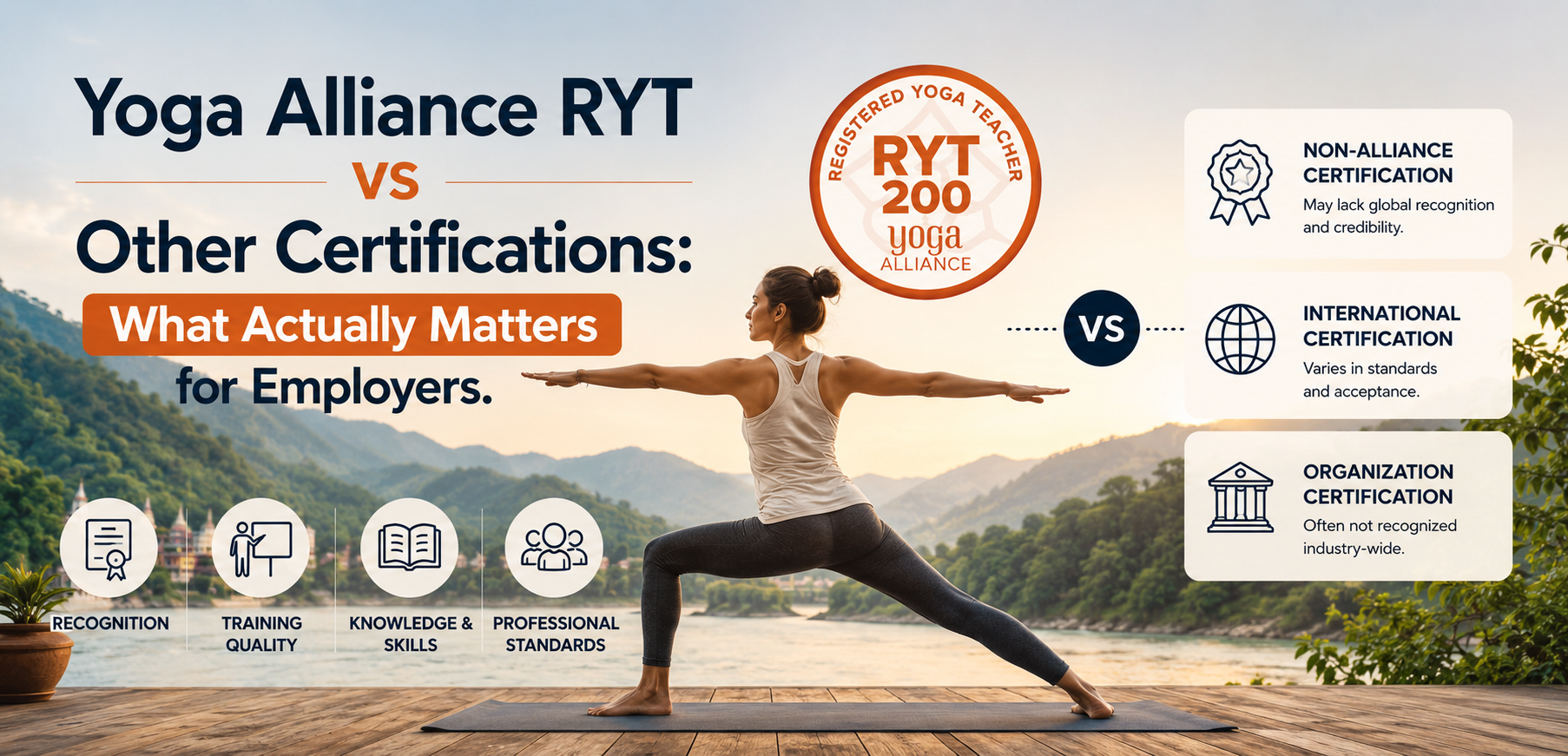
Yoga Alliance is not a government body, and it doesn't itself train teachers. It's a nonprofit membership and standards organization that sets minimum requirements for curriculum, teaching hours, and instructor qualifications, and then accredits schools that meet those standards. When a school becomes a Registered Yoga School (RYS), it means that school's curriculum has been reviewed and approved against Yoga Alliance's benchmarks.
Once you complete a training at an accredited school, you can register with Yoga Alliance as an RYT — Registered Yoga Teacher — at the level matching your training:
- RYT-200 — completed a 200-hour training at an accredited school; the standard entry-level credential
- RYT-300 / RYT-500 — completed additional advanced training hours (300 on top of a 200, totaling 500)
- E-RYT (Experienced RYT) — requires not just training hours but a minimum number of actual teaching hours logged after certification, at either the 200 or 500 level
- YACEP (Yoga Alliance Continuing Education Provider) — a separate credential for people or schools offering ongoing education, workshops, and continuing education hours to already-certified teachers
None of this is a license to teach in the legal sense. It's closer to an industry-recognized quality mark similar in spirit to how a professional certification in many other fields signals "this person met a recognized standard," even without a legal requirement behind it.

Also Read: First Time in Rishikesh? 12 Things Locals Wish You Knew Before Arriving
Why RYT Has Become the Default Employers Look For
Given that there's no legal requirement, you might wonder why Yoga Alliance registration has become such a common checkbox in job listings anyway. A few practical reasons explain it.
First, it saves employers time. A studio manager hiring for an open teaching slot doesn't have the bandwidth to personally evaluate the curriculum of every yoga school in the world. Seeing "RYT-200, Yoga Alliance registered" gives them a fast, recognizable signal that a minimum bar of training hours and content has been met, without having to dig into the details themselves.
Second, insurance. This is a detail new teachers often don't think about until it comes up directly: many liability insurance providers for yoga teachers specifically require RYT status as a condition of coverage. Studios that require their teachers to carry personal liability insurance — which is increasingly common — will often ask for proof of Yoga Alliance registration as part of that process, simply because it's what insurers recognize.
Third, portability. If you plan to teach in more than one place over your career different studios, different countries, retreat companies, cruise ships, wellness resorts Yoga Alliance is the credential most widely recognized across borders. A studio in Bali, a retreat center in Portugal, and a gym chain in Toronto are all more likely to recognize "RYT-200" than a certification from a small regional body that only operates in one country.
None of this means Yoga Alliance is the only path to a real teaching career. But it does explain why it's become the default reference point employers use, even informally.
Other Certifications You'll Come Across — And How Employers Tend to View Them
Yoga Alliance isn't the only credible option out there, and it's worth knowing how the alternatives generally get received.
Respected non-Yoga-Alliance schools. Some well-established training lineages and schools have built strong reputations over decades without going through Yoga Alliance accreditation, often because they existed before the organization did or because their tradition follows a different certifying structure. Employers familiar with that specific lineage may value it highly. The catch is that this recognition can be narrower — a hiring manager unfamiliar with that particular school or tradition may simply not know what to make of it, which can slow you down in a job search outside of that community.
International or regional certifying bodies. Various countries have their own national or regional yoga federations with their own standards. These can carry real weight within their home country or region, but tend to have less name recognition internationally — worth knowing if you plan to teach abroad at any point.
In-house studio certifications. Some larger studio chains train and certify their own teachers through an internal program, sometimes without Yoga Alliance accreditation at all. This can be a legitimate path to teaching at that specific studio, since they created the standard themselves — but it usually doesn't transfer well if you later want to work somewhere else, since other employers have no way to evaluate a credential that's specific to one company.
Online-only, very short, or "weekend" certifications. This is where employers get genuinely cautious. A legitimate 200-hour training, whether online, in-person, or hybrid, involves real depth — anatomy, philosophy, teaching methodology, supervised practice teaching. A "certification" completed in a weekend, or one that never requires you to actually practice teaching in front of people, tends to raise flags quickly with anyone experienced enough to be hiring. It's not that online training is inherently lower quality — plenty of accredited schools now offer legitimate online or hybrid RYT programs — it's specifically the combination of very low hours and no practical teaching component that experienced hiring managers learn to spot.

Also Read: How to Choose a Yoga Teacher Training in Rishikesh: 10 Questions to Ask
What Employers Actually Look At During Hiring (Beyond the Certificate's Name)
Here's something worth internalizing early: your certification gets you considered. It rarely gets you hired on its own. Once you're in front of an actual hiring manager, several other things tend to matter just as much, if not more.
Insurance eligibility. As mentioned, many studios require proof of liability insurance, and many insurers require RYT status to issue a policy. This can be a hard gate regardless of how good your training otherwise was.
Real teaching experience since certification. A brand-new RYT-200 with zero teaching hours looks different on paper from someone with the same credential who's already been teaching community classes, subbing, or leading friends and family through practice for six months. Employers know the certificate reflects training completed, not teaching skill demonstrated — so any experience you can show, even informal, helps.
How you perform in a trial class. Most studios will ask you to teach a sample class, either to the hiring manager alone or to a small group, before offering a position. This is often the real deciding factor. Your certification opens the door; your actual teaching — pacing, cueing, energy, how you handle a room — is what gets you through it.
Relevant specialization. A studio looking specifically for a prenatal yoga teacher, a Yin specialist, or someone experienced with kids' classes will weigh specialized training or experience heavily, sometimes above general certification level.
Basic professionalism. CPR and first aid certification, punctuality, communication skills, and references from previous teaching or training experience all factor in more than people expect going in.

Does the Level (200 / 300 / 500) Actually Matter for Getting Hired?
The overwhelming majority of entry-level studio and gym teaching positions only require an RYT-200. It's the recognized baseline for teaching a general public class, and most employers aren't going to ask for more than that from someone applying for their first teaching role.
Where 300-hour, 500-hour, or E-RYT status starts to matter more is further down the road — for senior teaching positions, roles training other teachers, specialized studios looking for advanced expertise, or leadership positions at retreat centers. E-RYT in particular, since it requires demonstrated teaching hours rather than just training hours, tends to carry real weight once you're applying for more senior roles.
A common mistake new teachers make is stacking hours before they have any real teaching experience to go with them — completing a 500-hour training back-to-back with almost no time spent actually teaching students. It's rarely the wrong move to keep learning, but if your goal is employability, real teaching hours after your 200-hour tend to open more doors, faster, than immediately chasing a higher certification level.
Also Read: How to Become a Certified Yoga Teacher in India: Complete Guide 2026
Red Flags Employers Watch For
A few patterns tend to make experienced hiring managers pause:
- Certificates from schools that aren't verifiable. If a hiring manager can't find the school in the Yoga Alliance directory, or can't find any independent information about it online, that's an immediate question mark.
- Training duration that doesn't add up. A genuine 200-hour Yoga Teacher training, delivered honestly, takes real time — commonly three to four weeks in an immersive format. A course claiming 200 hours of content compressed into a handful of days invites skepticism about how those hours were actually spent.
- No supervised practice teaching. If your training never had you actually stand up and teach a class to peers with feedback, that's a real gap — and it tends to show up quickly once you're in front of real students.
None of these are meant to scare you away from legitimate shorter or online formats — plenty exist and are accredited properly. The point is simply that these are the specific details experienced employers are quietly checking, whether or not they say so out loud during an interview.
So Which Certification Should You Actually Get?
If your goal is maximum flexibility the ability to apply to studios, gyms, wellness centers, retreat companies, and international opportunities without having to explain or justify your credential every time Yoga Alliance accreditation remains the safest, most broadly recognized baseline available right now. It won't guarantee you a job on its own, but it removes one variable from the equation and keeps every door open.
That said, the certification itself is really the floor, not the whole decision. The bigger factor in how prepared and hireable you'll actually be comes down to the quality of the school you train at — the depth of the curriculum, how much real teaching practice you get, and how experienced your instructors are. A Yoga Alliance registration from a school that rushed you through the syllabus with minimal practice teaching will still leave you underprepared, even with the "right" credential attached.
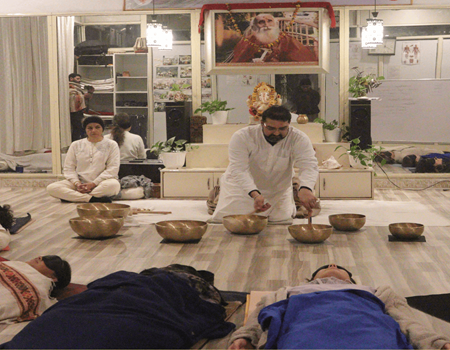
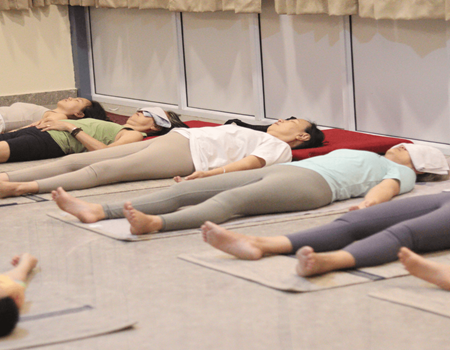
This is worth choosing carefully rather than picking whichever school shows up first in a search. At Om Shanti Om Yoga Ashram, our RYS 200, 300, and 500-hour courses are Yoga Alliance accredited, which means graduates leave already meeting the credential most employers recognize — but just as importantly, the training includes real supervised teaching practice, small batch sizes, and experienced instructors, so the certificate actually reflects genuine readiness to teach, not just hours logged.
The Bottom Line
The certificate matters less than most new teachers fear, but it still needs to clear a recognizable bar, and for the vast majority of hiring situations, Yoga Alliance remains that bar. Beyond that, what actually gets you hired and, more importantly, what makes you good enough to keep being hired, is real teaching skill: how you handle a room, how well you learned to cue and sequence, and how much genuine practice teaching you got before your first paying class.
Choose a school for the quality of the training first. Let the certification follow from that, and you'll walk into interviews with a lot more than just a piece of paper to show for it.











0 Comments
No comments yet. Be the first to comment!