

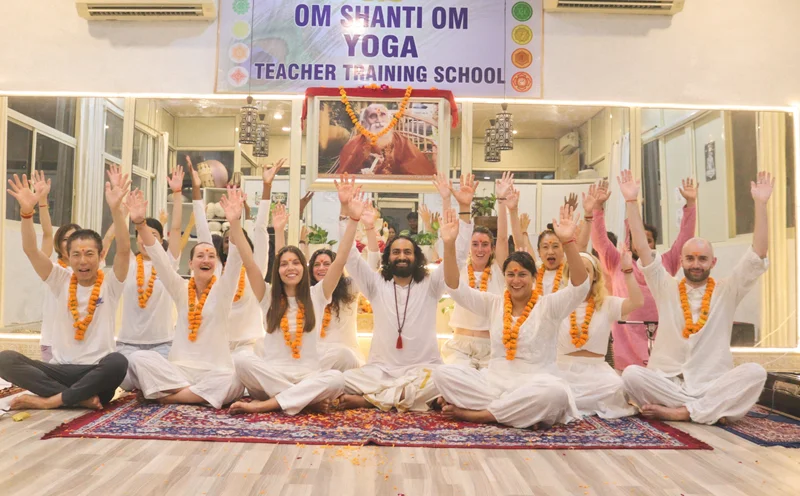

Who Can Join This Course?
Wondering if you're the "Right Fit" for a yoga teacher training? Here's some good news: this 100-hour course was built with beginners in mind, so you don't need years of practice, flexibility of a gymnast, or any teaching background to sign up.
Complete beginners are welcome. If you've only done a handful of yoga classes at your local studio (or none at all), this program starts from the ground up — basic postures, breathing, and philosophy — so nobody gets left behind on day one.
Regular practitioners looking to go deeper. Maybe you've been rolling out your mat for a while and want to actually understand the "why" behind the poses, not just follow along. This training fills in those gaps with real anatomy, philosophy, and breathwork instruction.
Anyone testing the waters before a longer YTTC. Not sure you're ready to commit to a full 200-hour Yoga TTC program? This 14-day training is a low-risk way to experience ashram life, a structured curriculum, and daily practice, and decide from there — plus, the hours count toward the 200-hour certificate if you choose to continue later.
People short on time. Two weeks is a realistic chunk of time for most people to carve out of a busy schedule, whether that's using up annual leave or planning it around a longer India trip.
Travelers and spiritual seekers. You don't need to want to teach yoga professionally at all. Plenty of students come purely for the experience — to unplug, live simply for two weeks, and be in Rishikesh, which has a different energy to it than practicing yoga back home.
- There's no age cutoff or fitness test — just come as you are, and the instructors will meet you where you're at.
- Reasonable physical readiness helps, since you'll be practicing twice a day, but modifications are always offered.
- This course alone doesn't award a Yoga Alliance–recognized certification (that requires the full 200 hours), so if global accreditation is your goal, keep that in mind going in.
What You Will Learn in 100 hours:
-
Hatha Yoga - Hatha yoga is one of the oldest and the root of yoga from Adhiyogi Lord Shiva, focusing on physical postures (asanas), breathing techniques (pranayama), and meditation. It balance the sun and moon energy. Hatha yoga moves at a gentler pace focusing on alignment, along with breathing. A typical Hatha class blends standing, sitting, and reclining postures that often ends in relaxation, helping to reduce stress and calm the nervous system. Physically, Hatha yoga improves flexibility, mind balancing, stress relief, cultivates awareness, therapeutic and a deeper mind-body connection. It remains a timeless te origin of yoga in the Universe.
-
Yoga Philosophy - This essential ancient information is key for you to earn yogic strength. You will be taught history and ethics of yoga, Indian culture, kundalini and much more.
-
Meditation - By practicing meditation you will be attempting to reach a state of self-realisation (Samadhi). This will aid in gaining tranquility of emotions, physical and mental being.
-
Pranayama - Ancient breathing techniques, used in preparation for meditation. This is a vital aspect of yoga practice. It will improve the respiratory system and purify the body and mind. There will be an introduction to the topic followed by sitting postures, Mudras (yoga gestures which affect energy flow) and yoga bandhas, which is a way of improving lung capacity.
-
Mantra Chanting - Each of the chants will have a unique meaning and will use the sacred sound vibrations in a spiritual way creating a clear and focused mind.
-
Sukshma Vyayama - Sukshma is a Sanskrit word meaning "subtle".The presence of sukshma is felt, but not seen. Sukshma yoga is an excellent relaxation technique that promotes and activate our pranic body. It is a form of yoga comprising of subtle exercises that are simple to practice yet highly effective.
-
Yoga Anatomy & Physiology - Learning and understanding the physical bodily functions will help prevent injury before, during and after practice. The types of yoga anatomy are both physical and mental. This will include the study of digestive, respiratory, circulatory, nervous and endocrine systems. Also organs and Chakras. The anatomy studies will teach how the body is affected by Asanas - skeletal, muscular and joint movements.
-
Yoga Alignment - Yoga alignment means positioning your body correctly during asanas so your joints, muscles and spine works effectively without any injuries. However, the safest alignment can be vary based on our body and flexibility.
-
Teaching practice and Methodology - You will learn how to carry out demonstrations, correct alignment and instruct other students by performing in front of your peers and yoga teachers in the course. This class meant for those who want to be a teacher.