


So you've booked it. Or maybe you're hovering over the "confirm payment" button, heart racing, wondering if you're about to make the best decision of your life or a very expensive mistake.
Either way, one question keeps circling: what is this actually going to be like?
The brochures show smiling people in perfect triangle poses against a sunset backdrop. The reality is sweatier, stranger, harder, and infinitely more beautiful than any photo can capture. This is the honest guide — the one I wish someone had handed me before my first morning bell rang at 5:45 AM.
Let's walk through what really happens during that 200-hour Yoga Teacher Training Program.
The Emotional Timeline Nobody Talks About
Here's a secret: nearly every trainee, at every school, in every season, goes through the same emotional arc. Knowing it won't spare you — but it will stop you from panicking when it hits.
Week One: The Honeymoon. You're wide-eyed. Everything is new — the sounds, the smells, the ashram cat that sleeps on your yoga mat. You take photos of your thali like it's fine art. You feel proud for waking up early. Your body aches in places you didn't know had muscles, but it's a good ache, and you wear it like a badge.
Week Two: The Wall. This is when it gets real. The 6 AM bell starts feeling hostile. Your hamstrings are tighter than when you arrived, somehow. The philosophy lectures are beautiful, but your mind keeps wandering to unanswered emails back home. Homesickness sneaks in. Around day nine or ten, almost everyone has a moment — sitting in meditation with tears streaming down their face, or snapping at a classmate over something trivial, or seriously Googling "can I get a refund on yoga teacher training."
This is normal. This is part of the design.
Week Three: The Shift. Something subtle happens. The poses that felt impossible start feeling... possible. Your mind quiets faster in meditation. You catch yourself actually looking forward to pranayama. You start bonding with your batchmates in that intense, sleep-deprived way that creates friendships for life. The homesickness turns into something else — a strange reluctance never to leave.
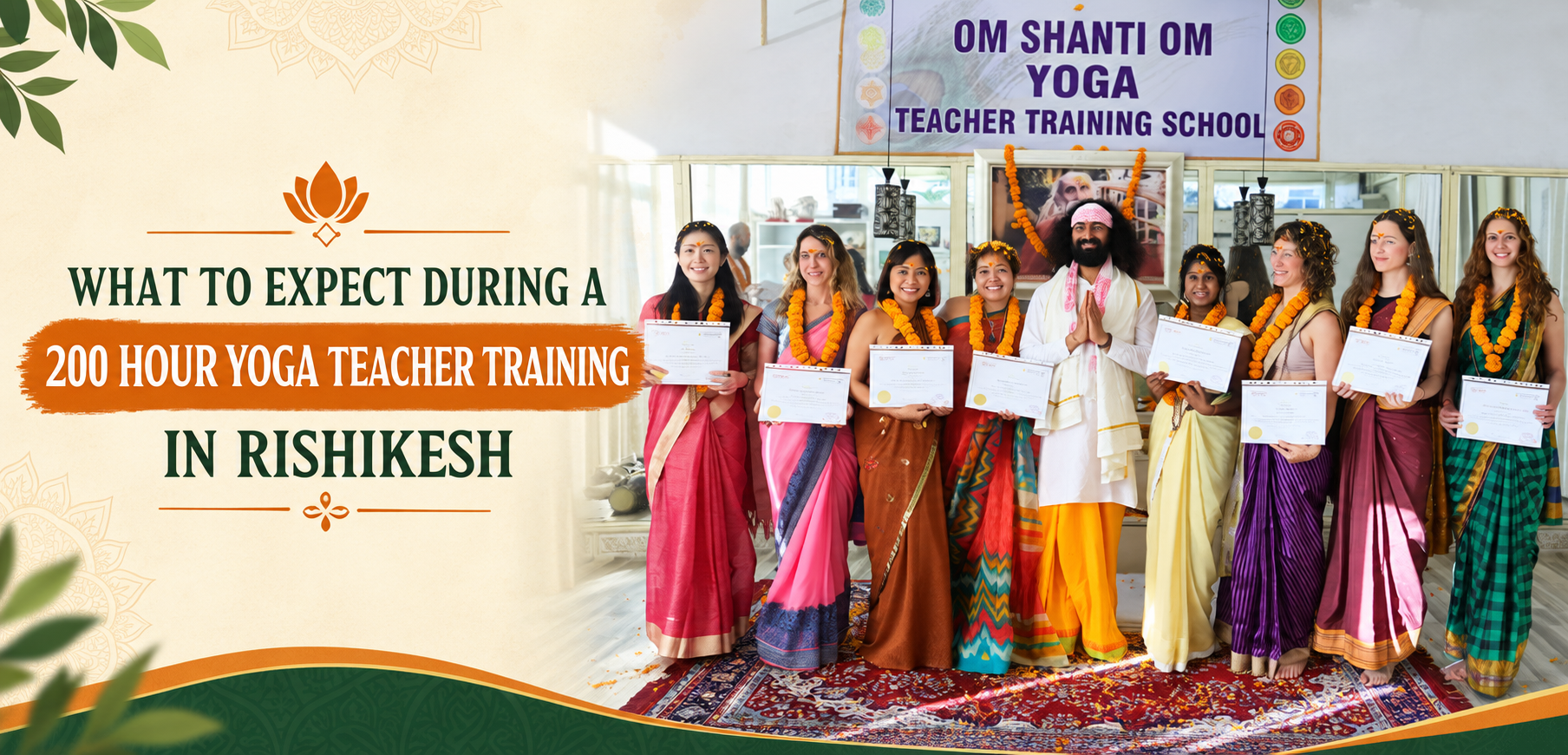
Week Four: The Bloom. By the final week, you're teaching mock classes and nailing the cueing. You feel stronger than you have in years. The certificate ceremony (yes, there's usually one, sometimes with flowers and certificates and group photos by the Ganges) feels less like an ending and more like a door opening.

Expect this arc. Trust it. Especially during week two.
The Physical Reality: Your Body Will Be Shocked (Then Transformed)
Let's do the math. On a typical training day, you'll spend three to four hours in asana practice — morning and evening sessions — plus walking everywhere on hills, plus sitting on floors for lectures. That's roughly double the movement most people's bodies are used to.
Week one: Everything hurts. Wrists from downward dog. Hamstrings from forward folds. A dull ache in muscles you can't name. You'll discover muscles in your inner thighs you never knew existed, and you'll be oddly proud of them.
The adjustment: Drink water like it's your job. Eat everything offered at meals (the vegetarian food at most schools is genuinely nourishing — rice, dal, chapati, vegetables, porridge). Take the afternoon rest seriously — this is not laziness; it's recovery, and your evening practice depends on it.
By week three: The soreness fades into something better — strength. People will start commenting on your posture. You'll stand taller without trying. Your balance improves in ways that feel almost supernatural. Many students lose a bit of weight and gain a surprising amount of visible muscle, especially in the arms, core, and back.
Injuries: Honest warning — minor strains happen, especially to enthusiastic beginners who push too hard. The single most important rule: pain that is sharp or localized is a stop signal, not a challenge. Tell your teachers immediately. Good instructors will modify everything for you. The philosophy of ahimsa (non-harming) applies to yourself first.

A Real Day, Hour by Hour
Let me walk you through an actual day — not the idealized version:
5:45 AM — The bell rings. Your first thought is unprintable. Your second thought is okay, let's go.
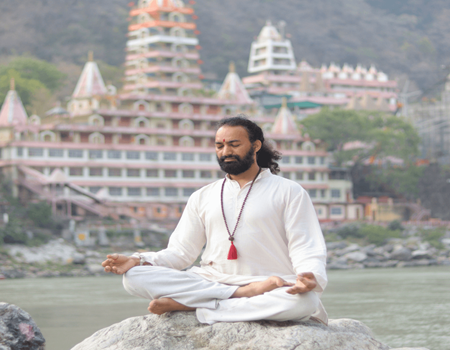
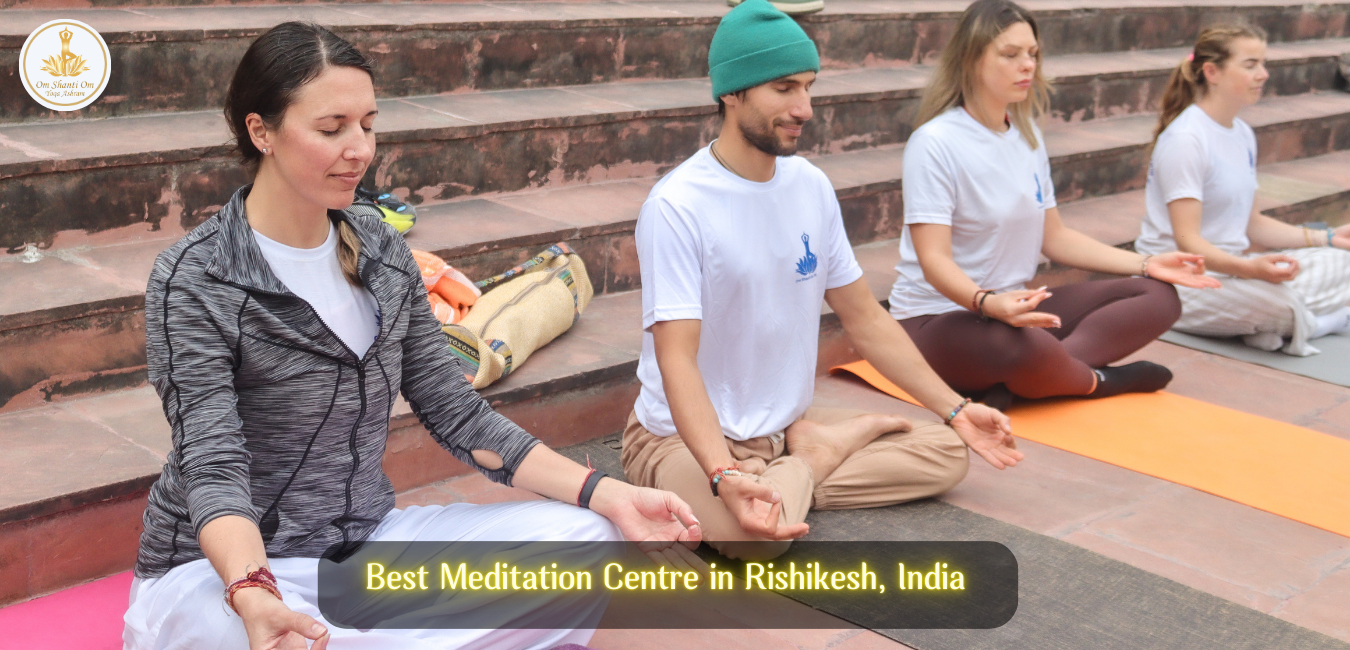
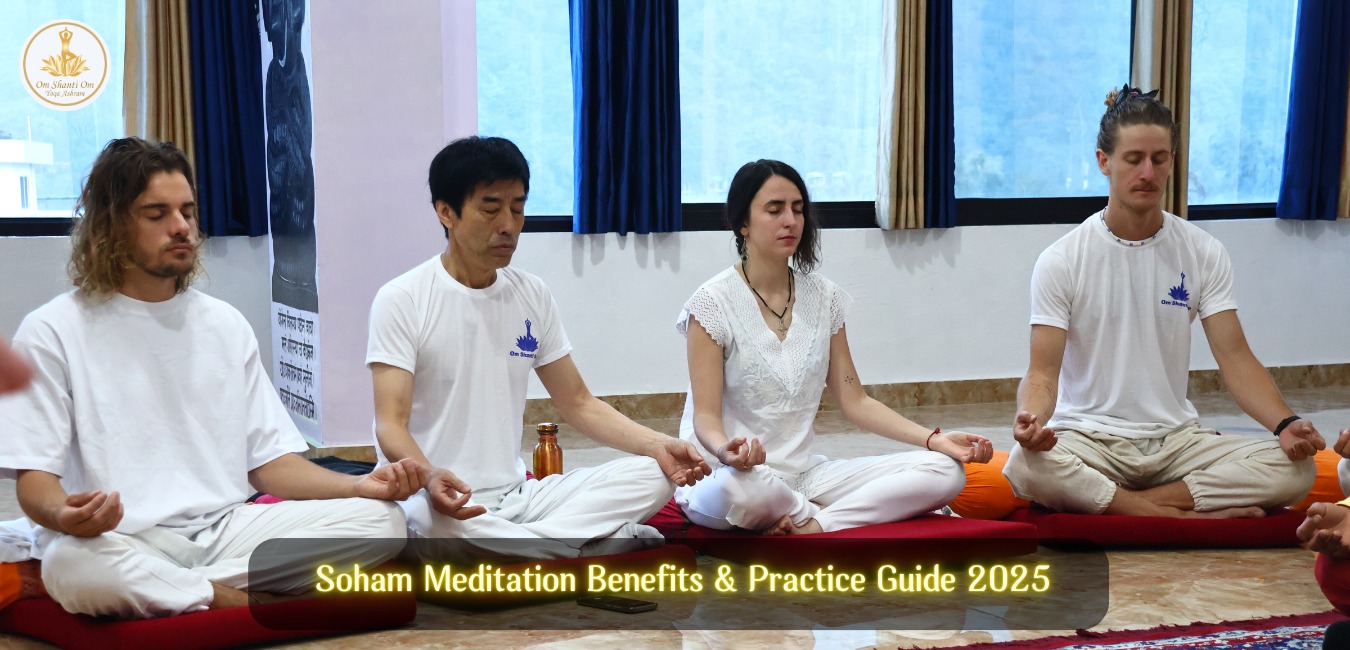
6:00 AM — Morning meditation. Cold air, blanket around your shoulders, the sky just beginning to lighten over the hills. The first five minutes are a negotiation with your restless mind. Somewhere around minute fifteen, something settles. This is the moment people later say changed everything.
6:45 AM — Pranayama. Controlled breathing — kapalbhati's rhythmic pumping, anulom vilom's alternating calm. You will be amazed how awake you feel afterward, without a single sip of coffee. (Caffeine withdrawal, by the way, is a real thing the first week. Chai helps. Most schools serve it.)
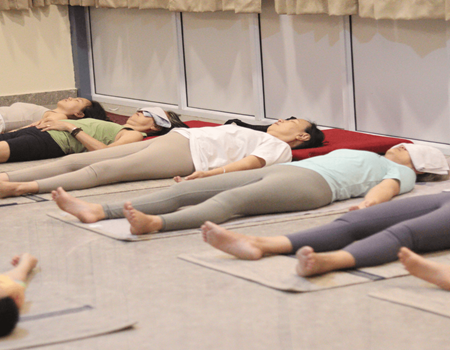
7:30 AM — Asana practice. Ninety minutes of movement — sun salutations, standing poses, balances, backbends, and finally the blissful collapse of savasana. Your body is warm now, fully awake, and this becomes, strangely, the most anticipated part of your day.
9:00 AM — Breakfast. Hot porridge, fruit, toast, maybe parathas. You will never have appreciated food this much. Conversations with your batchmates — people from Germany, Brazil, Japan, India itself — cover everything from alignment debates to which café has the best lemon-honey-ginger tea.
10:00 AM — Lecture. Anatomy today — skeletal system, muscle groups, why the sacrum matters. Or philosophy — breaking down the Yoga Sutras, and your mind being quietly blown by ideas written two thousand years ago that perfectly describe your own anxious thoughts.
1:00 PM — Lunch, then the sacred siesta. In summer, this is when the town holds its breath. You'll nap, journal, or sit on the rooftop watching eagles circle over the Ganges.
3:30 PM — Teaching methodology or alignment lab. This is where you learn to teach — breaking down poses, learning cueing language, practicing adjustments on each other. The first time someone says "walk me through a sun salutation," your voice will shake. By week four, you'll sound like you've been doing it for years.
5:00 PM — Evening asana practice. Usually gentler — yin-style holds, restorative poses, hip openers that release emotions you didn't know you were storing. Sometimes people quietly cry in pigeon pose. Nobody judges. Everyone understands.
7:00 PM — Dinner, light and early.
8:00 PM — Satsang or Q&A with teachers, sometimes kirtan chanting. The evening Ganga breeze comes through, someone plays harmonium, and you feel something ancient humming underneath everything.
9:30 PM — You will fall asleep mid-sentence. You will sleep deeper than you have in years.
The Learning: Far More Than Poses
Most beginners arrive expecting a month of stretching. They leave having studied:
Anatomy with real depth — not just muscle names, but how bodies differ. Why one person's chaturanga looks different from another's, and why both can be correct. This knowledge alone is worth the course fee if you plan to teach.
Philosophy that rewires you — the eight limbs of yoga, the concept of non-attachment, the Bhagavad Gita's lessons on duty and surrender. Students consistently report these lectures shifting how they think about work, relationships, and anxiety.
The art of stillness — daily meditation doesn't just calm you during the course. Trainees describe lasting changes: less reactivity, better sleep, an ability to pause before responding that follows them home.
Teaching skills under pressure — you'll teach your first class to real humans by week one or two. You'll fumble. You'll forget left from right (everyone does — you'll learn the trick of cueing from the student's perspective). And then, almost without noticing, you'll become someone who can hold a room.

The People: Your Batchmates Become Family
Ask anyone what they remember most five years later, and they rarely say the poses. They say the people.
A typical Rishikesh training batch is a small United Nations — often fifteen to twenty-five students from ten or more countries. Ages range from eighteen to sixty-plus. You'll practice partner yoga with a retired German engineer, discuss philosophy over dinner with a Brazilian dancer, and get corrected on your Sanskrit pronunciation by someone from Mumbai.
Something about the shared intensity — the early mornings, the emotional releases, the collective struggle through week two — forges bonds fast. Group chats formed on day one are still active years later. Wedding invitations get sent across continents. Some students meet their business partners, best friends, even future spouses.
Your teachers, too, become more than instructors. The best ones see exactly where you're struggling — physically and personally — and seem to say exactly the right thing at exactly the right moment. Many students stay in touch with their gurus for life, returning to Rishikesh years later to visit.
The Challenges, Honestly Stated
This guide would be dishonest without the hard parts:
The schedule is relentless. Six days a week, dawn to evening. There is no "I'll skip today and catch up." You can miss a session, but the course hours are counted — fall too far behind, and you won't graduate.
Ashram life is simple. Depending on your school: shared bathrooms, cold showers (or bucket baths), thin mattresses, spotty Wi-Fi, and walls thin enough to hear your neighbor's 5 AM alarm. Some find this purifying. Some find it character-building. A few find it genuinely difficult — and that's valid.
Emotional surfacing is real. Intensive practice plus meditation plus being far from home tends to open doors people have kept closed for years. Old grief, old anxiety, old anger — it comes up, sometimes in the middle of a hip-opening sequence. Schools with experienced teachers handle this gracefully, offering support and perspective. It passes. It usually leaves something healed in its place.
Diet adjustment. If your body is used to meat, heavy spice, or processed food, the sattvic diet takes a few days. Most people feel remarkably clean and energized by week two — and then struggle to go back home and eat normally.
The Transformation: What You Actually Take Home
The certificate is real — an RYT-200 credential recognized worldwide, the foundation of a teaching career if you want one. But graduates consistently say the tangible benefits are almost beside the point.
What stays with you:
-
A daily practice that feels as natural as brushing your teeth
-
A body that is stronger, more mobile, and more yours than it has been in years
-
Tools for anxiety — breathwork you can use anywhere, anytime
-
Clarity about what matters (months of busywork tend to fall away after Rishikesh)
-
A global community of fellow practitioners
-
A deep, lived understanding that yoga is not exercise — it's a way of being
One graduate described it perfectly: "I went to learn how to teach yoga. I came back having learned how to live." It sounds like a quote on a scented candle. Then you do the training, and you realize it's just an accurate description.

Final Words Before You Go
So, what should you expect during a 200-hour yoga teacher training in Rishikesh?
Expect sore muscles and surprising strength. Expect one brutal week and three glorious ones. Expect to cry at least once and laugh until your stomach hurts at least once a day. Expect simple food that tastes like a feast, strangers who become family, and a version of yourself you haven't met yet.
Expect it to be harder than the brochure suggests — and infinitely more rewarding than the brochure could ever promise.
The Ganges will keep flowing whether you show up or not. But if you do show up — really show up, bell at 5:45 and all — you might just leave carrying something you'll keep for the rest of your life.
I'll see you on the mat.
Namaste.












0 Comments
No comments yet. Be the first to comment!