


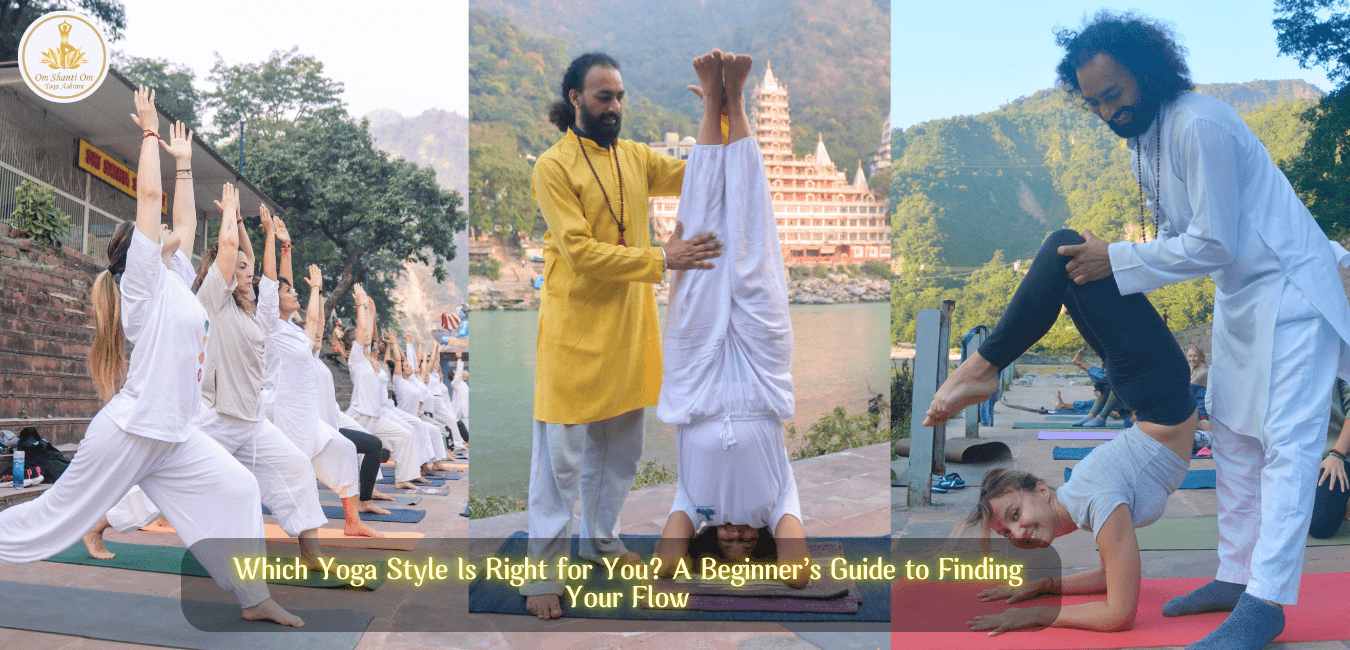
Starting yoga is exciting, but let’s be honest—it can also be a little confusing. You decide you’re ready to roll out the mat, but then you’re hit with a menu of options: Hatha, Vinyasa, Ashtanga, Yin, Restorative. Suddenly, you’re wondering if you need to be a gymnast or a monk just to get started.
Here’s the truth: there isn’t one "best" style of yoga. There is only the style that works best for you—for your body, your stress levels, and what you actually enjoy.
If you’re feeling overwhelmed, don’t worry. This guide is designed to break down the differences, allowing you to find a practice that feels like home, whether you’re practising in your living room or planning a trip to study yoga in Rishikesh.
It’s Not Just About Touching Your Toes
Before we dive into the styles, it helps to remember that yoga isn’t just a workout. Sure, modern classes focus a lot on the physical stuff, but traditional yoga is much bigger than that. It’s a holistic system designed to help you find balance and clarity.
Authentic yoga involves moving your body, yes, but also controlling your breath (pranayama), calming your mind, and becoming more self-aware. Keeping this in mind takes the pressure off. You aren't trying to "win" at yoga; you're using it as a tool to feel better.
Why Picking the Right Style Actually Matters
A lot of people quit yoga after one or two classes, not because yoga "isn't for them," but because they walked into the wrong room.
If you’re exhausted and stressed, a high-intensity power yoga class might make you feel worse. If you have a ton of energy to burn, a slow meditative class might make you feel restless. Finding the right match helps you stay consistent, avoid injury, and actually enjoy the process.
This is why places like Om Shanti Om Yoga in Rishikesh focus so heavily on beginner-friendly guidance—so you start on the right foot.
A Quick Self-Check Before You Choose
Be honest with yourself for a second. Ask:
- What’s my energy level? Am I totally drained, or do I need to sweat?
- What’s my body asking for? Deep relaxation or building strength?
- Why am I here? Is it for fitness, mental peace, or a mix of both?
- Do I like structure or flow? Do I want to know exactly what comes next, or do I like variety?
Your answers are your compass. Now, let’s look at the styles.
Which Yoga Style is Best For You?
To mark the particular Yoga style for a beginner, we need to test the pace. Typically, people begin with the basics and then gradually increase their speed. Additionally, breathing coordination is essential for effective yoga practices. There are a few yogic styles, like Hatha Yoga, which has a slow pace but is very effective for beginners in the Yoga field.
Once you feel confident in the postures and long-term pose handling, then you can try other yoga styles. The different yoga styles in India evolved with time, and we can’t confirm this by sitting by the side pool. In the article, there is guidance for Yoga and its types to perform as a beginner.
Hatha Yoga Guide for Beginners
Hatha Yoga is one of the best physical yoga styles. Like, if yoga had a family tree, Hatha yoga would be sitting right at the roots; it is an ancient form of yoga. “Hatha” itself is defined with two words, “Ha” (sun) and “Tha” (moon), which sounds poetic but really just means it’s all about balance, yin and yang in Chinese philosophy.
You won’t find any frantic, sweat-fest flows here. Hatha’s the chill one in the yoga crew. You get to actually hang out in each pose, figure out what your limbs are doing, and, honestly, maybe even remember to breathe (wild concept, right?). Posture? Gets better. Body awareness? Skyrockets. And your mind might finally stop running a million miles a minute. Maybe.
- Before any fast-paced practice, it is one of the best yogic styles.
- Have some relaxing yoga poses and breathing techniques.
- Better for breath coordination.
- Builds a strong foundation and improves the cycles of the body.
Is Vinyasa Yoga Good for Beginners?
This is one of the fast-paced movements in Yoga, and generally not for beginners. Each movement of this yogic style is guided and known as the flowing style of Yoga. It is like a dance guide and a continuous movement of the postures. There are chances of getting injured while moving in such a fast-paced yoga without any previous experience. In Vinyasa, every posture is connected smoothly with the breathing of the person performing yoga.
- It is not recommended for beginners.
- Best for the intensity practice.
- Give a breath coordination or go with the air flow in and out of the body.
What is Yin Yoga?- Yin Yoga For Beginners
Yin Yoga’s basically the chillest yoga you’ll ever meet. Forget racing through sweaty vinyasas—this style is all about hitting pause. You drop into a pose, and then… You just hang out. We’re talking two, three, maybe even five minutes. Sometimes longer, if you’re feeling wild. The magic? It’s not about flexing your biceps or chasing six-pack abs. Yin is after the deep stuff—ligaments, tendons, that webby fascia holding you together. No forcing, no straining. You just kind of melt, let gravity do its thing, and before you know it, your body opens up in ways you didn’t even know you needed. It’s like getting a massage without the awkward small talk.
- Best for the daily stretching practices.
- Good for the people who want to stay in a pose for a long time.
- Long holding poses like Butterfly Pose (Baddha Konasana), Dragon Pose (Low Lunge), Caterpillar Pose (Seated Forward Fold), Sphinx Pose (Gentle Backbend), and Reclined Twist are practised in this style of Yoga.
- Gives an emotional balance to the body and balances the nervous system.
Restorative Yoga Pose Exercise for Beginners
Restorative Yoga is basically a blanket fort of the yoga world. Forget all that sweaty stretching or trying to balance like a Cirque du Soleil performer—here, you just pile up a bunch of pillows, maybe a squishy blanket or two, and let your body melt. No flexing, no gritting your teeth, just pure, delicious laziness.
You land in a pose, prop yourself up so you’re comfy as heck, and then… nothing. You just hang out for, what, five, ten minutes? Sometimes longer if you’re really vibing. Soft breathing, zero movement, maybe a little daydreaming. Honestly, if you’re running on fumes, feeling frazzled, or just want to hit pause on life for a bit, this is your jam. Total permission to chill.
- Restorative poses help in the relaxation of the whole body.
- Use of the yoga props, like bricks and a belt, is done.
- There are different types of poses, like Balasana, Baddhakonasana, and Viparita Karani, which are practised in this way.
- Different relaxation poses originated and evolved in this practice.
Hatha Yoga: The Perfect Starting Point
If you’ve never done yoga before, Hatha is usually the best place to start. It’s the foundation of almost all physical yoga.
Why it works for beginners:
It’s slower. You hold poses long enough to actually understand what you’re doing. The teacher will focus on alignment and safety, giving you time to adjust. It’s less about "flowing" and more about learning the basics properly. It builds a solid foundation without rushing you.
Vinyasa Yoga: Go with the Flow
If you hate sitting still and love moving to music, Vinyasa might be your jam. It’s often called "Flow" yoga because you move smoothly from one pose to the next, linking your movement to your breath.
Who is it for?
If you want to build stamina, get your heart rate up a bit, and enjoy variety (no two classes are the same), try Vinyasa. Just be aware that it moves faster than Hatha, so it helps to know a few basic poses first.
Ashtanga Yoga: Discipline and Structure
Ashtanga is intense, but in a good way. It follows a set sequence of postures—you do the same poses in the same order every time.
Is it beginner-friendly?
It can be physically demanding, but it’s great if you love routine and discipline. You can measure your progress easily because the sequence never changes. Many schools teach a modified version for beginners so you can build strength gradually.
Yin Yoga: The Deep Release
Imagine doing yoga, but you only do five poses in an hour, and you do them all on the floor, supported by pillows. That’s Yin. It targets the deep connective tissues (fascia) rather than just muscles.
Why try it?
If you feel stiff, tight, or mentally scattered, Yin is magic. It challenges your mind to sit still, but leaves your body feeling incredibly open and relaxed. It’s the perfect balance to a busy, stressful life.
Restorative Yoga: Radical Relaxation
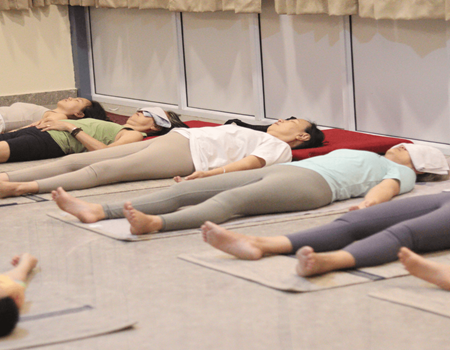
This is the gentle hug of the yoga world. You use props like bolsters, blankets, and blocks to support your body completely. There is zero effort involved.
Who needs this?
Everyone, honestly. But specifically, if you are recovering from an injury, dealing with burnout, or struggling with high anxiety, this is for you. It switches your nervous system from "fight or flight" to "rest and digest."
Kundalini Yoga: Energy and Spirit
Kundalini is a bit different. It combines movement, dynamic breathing, chanting (mantras), and meditation to awaken energy at the base of the spine.
Is it for beginners?
You can start as a beginner, but expect something different from a typical gym yoga class. It’s less about "fitness" and more about spiritual and emotional release.
Don’t Forget the Breath (Pranayama)
Regardless of the style you pick, you’ll learn to breathe. For beginners, simple breathwork helps expand lung capacity and—more importantly—gives you a tool to calm anxiety instantly. At schools like Om Shanti Om Yoga, breathwork and meditation are taught right alongside the physical poses because they are the keys to the real benefits of yoga.
Quick Cheat Sheet: Matching Your Goal to a Style
- "I want to touch my toes." → Try Hatha or Yin.
- "I want to get strong and sweat." → Try Vinyasa or Ashtanga.
- "I am stressed out and tired." → Try Restorative or Yin.
- "I want to understand the deeper side of yoga." → Try Hatha or Kundalini.
- "I want to dive deep and maybe teach." → Look into a 200-Hour Yoga Teacher Training.
The "Teacher Training" Route
Interestingly, many beginners sign up for a Yoga Teacher Training (YTT) not to teach, but to learn. In a course like the one at Om Shanti Om Yoga, you don't just pick one style; you get exposed to Hatha, Vinyasa, Ashtanga, philosophy, and anatomy all at once. It’s the fastest way to figure out what you love while building a safe, lifelong practice.
Final Advice for New Yogis
- Don't compare. The person on the mat next to you might have been practising for ten years. Focus on your own mat.
- Listen to your body. If it hurts, stop. Discomfort is okay; pain is not.
- Be patient. You won't master a handstand in a week, and that's okay.
Yoga is a personal journey, not a performance. Whether you start with a gentle Hatha class or dive into a full immersion in Rishikesh, the "right" style is simply the one that makes you want to show up again tomorrow.
Namaste!






0 Comments
No comments yet. Be the first to comment!