

Most people come to yoga through the body. They want more flexibility, less back pain, and a way to decompress after a long day. The breath, if they think about it at all, is just something that happens in the background.
Then somewhere along the way — maybe in the middle of a particularly still moment, or during a class where the teacher asks everyone to slow the exhale — something shifts. The breath stops being automatic. It becomes interesting. It becomes, somehow, the whole point.
That's the beginning of pranayama.
If you've ever wondered what pranayama actually is, why experienced yogis speak about it with such reverence, or how a simple breathing practice can genuinely change the way you feel, this guide is for you. We'll cover the origins, the science, the techniques, the benefits, and how to begin. No prior experience required.
What Is Pranayama? The Full Definition
The word pranayama comes from Sanskrit. It combines two roots: prana, which translates roughly as life force or vital energy, and ayama, which means extension, expansion, or regulation. Put together, pranayama is the practice of extending and regulating the life force, and breath is the primary vehicle through which that happens.
In yogic philosophy, prana is not simply the air we breathe. It's the animating intelligence behind all living things — the energy that moves through the body, sustains the organs, powers thought, and connects us to something larger than ourselves. Breath is the most tangible expression of prana, which is why working with the breath is understood as working directly with the life force itself.
Pranayama holds a specific place in the classical structure of yoga. In Patanjali's Yoga Sutras — one of the foundational texts of yoga philosophy, written roughly 2,000 years ago — yoga is described as an eight-limbed path. The limbs move progressively inward, from ethical principles and physical postures toward meditation and deep states of inner stillness. Pranayama is the fourth limb, sitting between asana (physical postures) and pratyahara (withdrawal of the senses). It is, in this sense, the bridge — the practice that begins to turn attention inward after the body has been prepared.
The Hatha Yoga Pradipika, another classical text, goes further — describing pranayama as the most important of all yoga practices, the master key to purifying the body and steadying the mind.
The difference between ordinary breathing and pranayama is consciousness. We breathe thousands of times every day without awareness. Pranayama asks us to bring deliberate attention to every inhale, every exhale, every pause — and in doing so, to begin to influence states of mind and body that normally operate beyond our conscious reach.

The Science Behind Pranayama
Ancient yogis described the effects of pranayama through the lens of energy channels, life force, and states of consciousness. Modern science describes the same effects through the autonomic nervous system, the vagus nerve, and neurochemistry. Both frameworks are pointing at something real.
The autonomic nervous system governs the body's automatic functions — heart rate, digestion, hormone release, immune response. It has two primary modes: the sympathetic nervous system, which activates in response to stress or danger (the fight-or-flight response), and the parasympathetic nervous system, which governs rest, recovery, and restoration.
Here's the remarkable thing: breath is the only autonomic function we can consciously control. Heart rate, digestion, blood pressure — we can't directly regulate any of these with a thought. But we can change how we breathe, and in doing so, we directly influence the nervous system.
Slow, extended exhalations activate the parasympathetic nervous system. Rapid, forceful breathing activates the sympathetic. Breath retention alters CO₂ levels and oxygen delivery in ways that affect brain chemistry and consciousness. The vagus nerve — the longest cranial nerve in the body, responsible for much of the parasympathetic response — is directly stimulated by certain breathing patterns, particularly those involving humming, slow breathing, and extended exhales.
Research published in peer-reviewed journals over the last two decades has consistently shown that regular pranayama practice reduces markers of physiological stress, lowers blood pressure, improves heart rate variability (a key indicator of nervous system health), and reduces symptoms of anxiety and depression. It also improves respiratory efficiency — meaning the lungs extract more oxygen per breath, which has downstream benefits for energy, endurance, and cellular health.
The science, in other words, confirms what practitioners have known experientially for centuries: working with the breath changes everything.
Core Concepts to Understand Before You Begin
Before diving into specific techniques, a few foundational concepts will make the practices more meaningful.
Puraka, Rechaka, and Kumbhaka are the Sanskrit terms for the three phases of the breath cycle. Puraka is the inhalation — the active drawing in of breath and prana. Rechaka is the exhalation — the release. Kumbhaka is retention — the pause. There are two forms of kumbhaka: antara kumbhaka (retention after inhalation, with the lungs full) and bahya kumbhaka (retention after exhalation, with the lungs empty). Both have profound effects on the nervous system and are used strategically in advanced practice.
Bandhas are energy locks — internal muscular engagements that direct the flow of prana within the body during pranayama. The three primary bandhas are Mula Bandha (root lock, engaging the pelvic floor), Uddiyana Bandha (upward abdominal lock), and Jalandhara Bandha (chin lock, dropping the chin toward the chest). These are typically introduced progressively and are best learned with an experienced teacher.
Nadis are the subtle energy channels through which prana flows in the body. Classical texts describe 72,000 nadis, but three are primary: Ida (associated with lunar, cooling, feminine energy — connected to the left nostril), Pingala (solar, heating, masculine energy — the right nostril), and Sushumna (the central channel, running along the spine). Many pranayama techniques work specifically with these channels, using the nostrils as entry points for regulating energy flow.
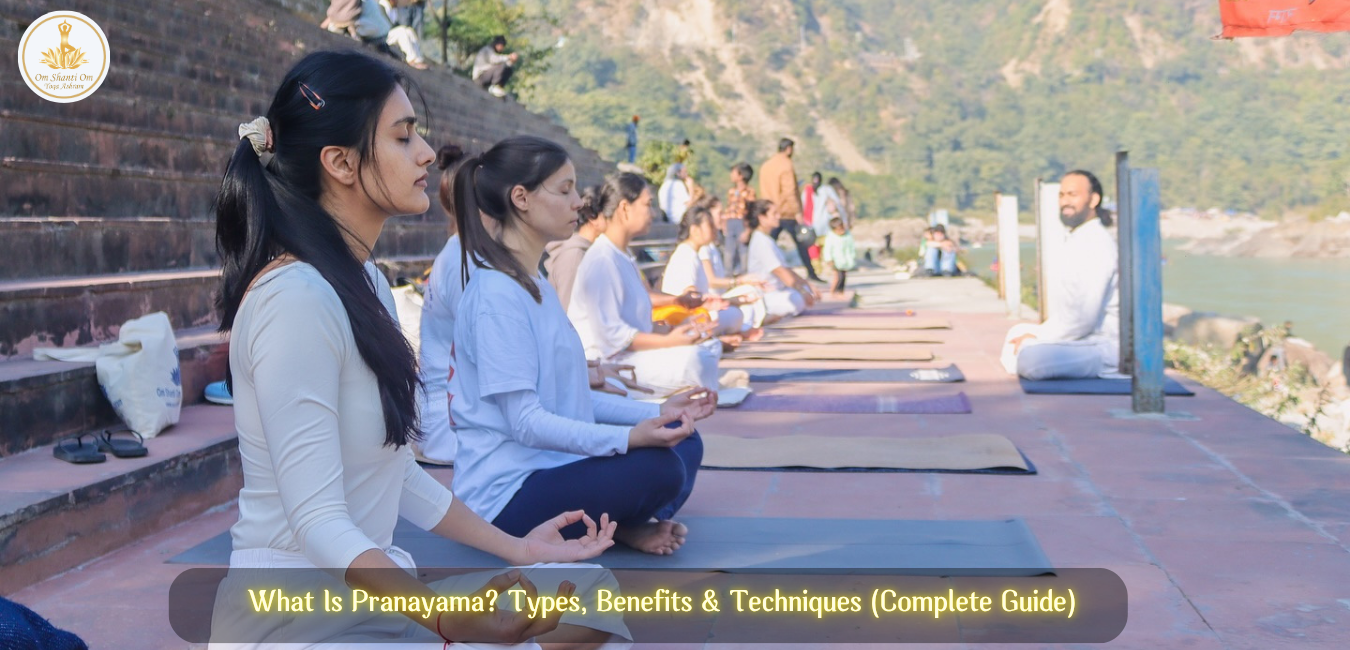
Posture matters more in pranayama than most beginners realize. An upright spine — whether seated cross-legged, in Virasana (hero pose), or simply in a chair — allows the breath to move freely and the energy to flow without obstruction. The chin is generally slightly tucked, the shoulders relaxed, the hands resting softly on the knees.
Types of Pranayama — A Complete Breakdown
Foundational Techniques
Diaphragmatic Breathing This is where every pranayama practice begins. Most adults breathe shallowly — into the chest, using the secondary respiratory muscles. Diaphragmatic breathing retrains the breath to originate in the belly, using the diaphragm as the primary muscle. Place one hand on the chest and one on the belly. Inhale and allow the belly to rise while the chest stays relatively still. Exhale and feel the belly fall. This alone, practiced for five to ten minutes daily, begins to shift the nervous system toward parasympathetic dominance.
Sama Vritti (Box Breathing) Sama means equal; vritti means fluctuation. In this practice, all four phases of the breath — inhale, retention, exhale, retention — are given equal counts. A common ratio for beginners is four counts each. Inhale for four, hold for four, exhale for four, hold for four. This equal rhythm creates a profound sense of balance and calm, making it particularly useful before high-stress situations, before meditation, or as a tool for anxiety management in daily life.
Nadi Shodhana (Alternate Nostril Breathing) One of the most widely practiced and researched pranayama techniques. Using the right hand, the thumb closes the right nostril while you inhale through the left. Then the ring finger closes the left nostril while you exhale through the right. Inhale through the right, close, exhale through the left. That completes one round. The alternating pattern balances the activity of the two hemispheres of the brain, calms the nervous system, and is said to purify the nadis — hence the name, which translates as "channel cleansing." Studies have found regular nadi shodhana practice reduces anxiety and improves cardiovascular function.
Energizing Techniques
Kapalabhati (Skull-Shining Breath) Kapala means skull; bhati means light or shine. This technique involves rapid, forceful exhalations through the nose — driven by sharp contractions of the lower belly — followed by passive inhalations. The pace is roughly one exhale per second. The effect is immediately energizing: it clears the respiratory passages, generates heat in the body, stimulates the digestive organs, and sharpens mental clarity. Beginners typically start with 30 rounds and gradually increase. Note: Kapalabhati is contraindicated during pregnancy, menstruation, and for those with high blood pressure or heart conditions.
Bhastrika (Bellows Breath) Named after the bellows used to stoke a fire, Bhastrika involves both forceful inhalation and forceful exhalation — unlike Kapalabhati, which emphasizes only the exhale. It generates significant heat, dramatically increases oxygen and prana in the body, and is considered one of the most powerful purifying practices in hatha yoga. It is an advanced technique and should be learned with proper guidance before practicing independently.
Surya Bhedana (Right Nostril Breathing) Surya means sun. In this technique, all inhalations enter through the right nostril (closing the left) and all exhalations exit through the left. Since the right nostril is associated with the solar, activating Pingala nadi, this practice generates warmth, increases energy, and stimulates the sympathetic nervous system in a controlled, intentional way. It's used when energy is low or when warming the body is beneficial.
Calming Techniques
Bhramari (Humming Bee Breath) Bhramari refers to the Indian black bee. During this practice, you close the ears with the thumbs and the eyes with the fingers, inhale deeply, and on the exhale produce a sustained humming sound — like a bee. The vibration created by the hum directly stimulates the vagus nerve and produces almost immediate relief from anxiety, agitation, and mental restlessness. It is one of the most accessible and effective techniques for acute stress and is safe for most practitioners, including beginners.
Sitali and Sitkari (Cooling Breaths). Both techniques cool the body, particularly useful in hot climates or after energizing practices. In Sitali, the tongue is rolled into a tube (a genetic ability not everyone has) and the breath is drawn in through it like a straw, then exhaled through the nose. In Sitkari — the alternative for those who can't roll the tongue — the teeth are lightly pressed together, the lips parted, and the breath drawn in across the teeth with a soft hissing sound. Both produce a noticeable cooling sensation throughout the body and calm the mind.
Chandra Bhedana (Left Nostril Breathing) The lunar counterpart to Surya Bhedana. All inhalations enter through the left nostril, all exhalations exit through the right. The left nostril governs the cooling Ida nadi — the lunar, feminine energy channel. This technique calms the nervous system, reduces heat in the body, and is particularly effective before sleep or during periods of agitation and overheating.
Advanced Techniques
Kumbhaka (Breath Retention) Breath retention — whether after inhalation or after exhalation — is considered the heart of advanced pranayama practice. When the breath is held, prana is said to be concentrated and directed within the body. Physiologically, retention after inhalation increases CO₂ tolerance and oxygen efficiency; retention after exhalation activates the parasympathetic response profoundly. These practices should be developed gradually and, ideally, under the guidance of an experienced teacher.
Kevala Kumbhaka This is not a technique so much as a state — the spontaneous, effortless suspension of breath that arises naturally in deep meditation. Classical texts describe Kevala Kumbhaka as a sign of advanced practice, where the breath becomes so refined it appears to pause of its own accord. It cannot be forced; it is cultivated through years of consistent pranayama and meditation practice.

Benefits of Pranayama — Physical, Mental, and Spiritual
The benefits of a consistent pranayama practice are broad and well-documented.
Physically, regular practice improves lung capacity and respiratory efficiency, lowers resting heart rate and blood pressure, supports digestive health through abdominal engagement and parasympathetic activation, strengthens the immune system, and significantly increases energy levels by improving how the body uses oxygen.
Mentally and emotionally, pranayama is one of the most effective natural tools for managing anxiety and chronic stress. It improves focus and cognitive clarity, enhances sleep quality, builds emotional resilience, and has been shown to reduce symptoms of mild to moderate depression. The direct relationship between breath and mental state means that changing one reliably changes the other — and unlike many interventions, pranayama works immediately as well as cumulatively.
Spiritually, pranayama deepens meditation by settling the mind quickly and increasing the practitioner's capacity for sustained inner attention. It develops a felt sense of prana — the life force — moving through the body, which over time cultivates a quality of presence and self-awareness that extends far beyond the time spent on the mat.
How to Start a Pranayama Practice
Begin simply. Five to ten minutes is enough to start, and more than enough to feel the effects.
The best time to practice is early morning, before eating, when the mind is relatively quiet, and the body is rested. A consistent posture — seated upright on the floor or in a chair — establishes a physical container for the practice.
For beginners, start with diaphragmatic breathing for two to three minutes, then move into Sama Vritti or Nadi Shodhana for the remainder of your session. Practice daily if possible. Consistency matters far more than duration.
As you grow more comfortable, introduce one new technique at a time — exploring it for at least a week before adding another. Pranayama is not a collection of tools to accumulate; it's a language to learn gradually and deeply.
Safety and Precautions
Pranayama is safe for most people, but certain techniques require care.
Avoid forceful practices — Kapalabhati, Bhastrika — during pregnancy, menstruation, or if you have high blood pressure, heart conditions, or a history of seizures. Breath retention should be approached gradually and is not appropriate for beginners without guidance.
If you feel dizzy, lightheaded, or anxious during any practice, return to natural breathing immediately and rest. These sensations are signals to slow down, not push through.
Learning from a qualified teacher — particularly for the more advanced techniques — is always the wisest approach. A good teacher can observe your practice, correct subtle errors, and guide your progression in a way no article can fully replicate.
Conclusion: The Breath Has Been Waiting
Pranayama doesn't ask you to be flexible, strong, or experienced. It asks only that you pay attention to something you've been doing every moment of your life — and begin to do it with intention.
That shift — from unconscious to conscious, from automatic to deliberate — is where the practice begins. And from there, the effects ripple outward in ways that are difficult to predict and genuinely difficult to overstate.
Start with five minutes. Pick one technique. Come back tomorrow.
The breath has been waiting for you to notice it. Once you do, it will not disappoint.
Start Your Yoga Journey
If you feel inspired to explore Ashtanga Yoga more deeply, you can join:
- 100 Hour Yoga Teacher Training
- 200 Hour Yoga Teacher Training
- 300 Hour Yoga Teacher Training
- 500 Hour Yoga Teacher Training
At Om Shanti Om Yoga Ashram in Rishikesh, you will experience yoga in its most authentic and traditional form.






0 Comments
No comments yet. Be the first to comment!