


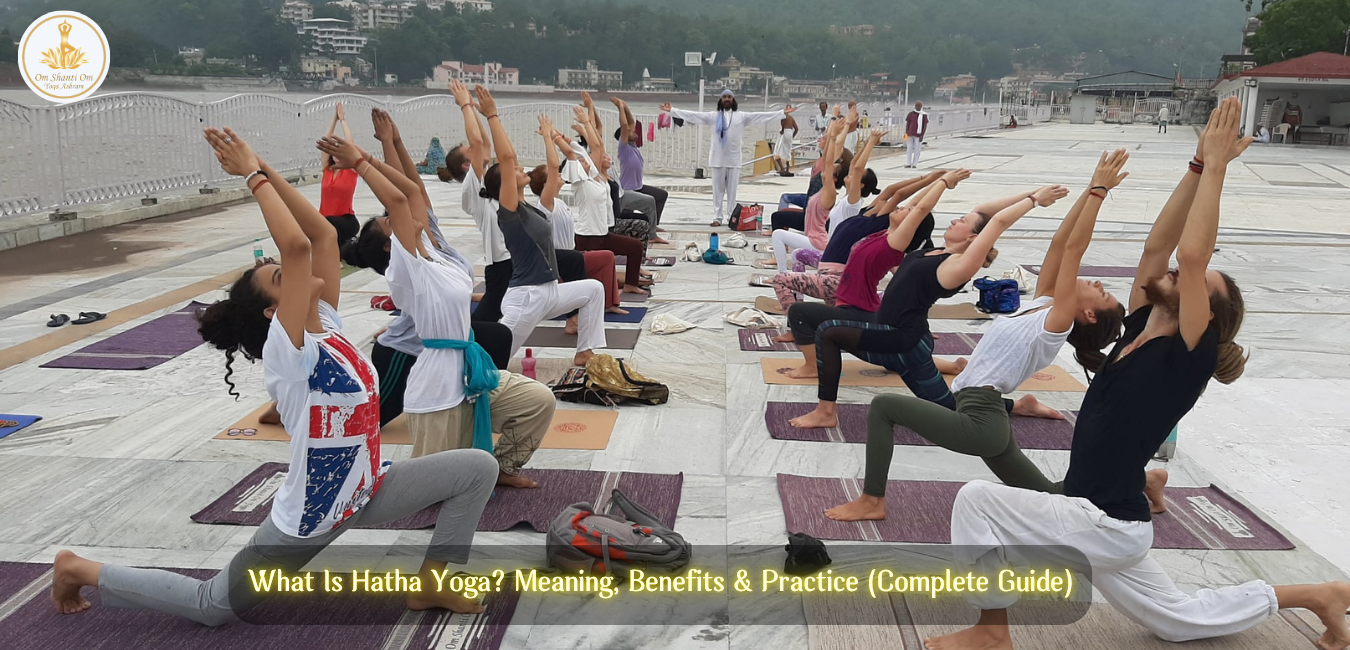
Yoga has become a global practice, but at its core lies a traditional system that has guided millions toward better health and inner balance—Hatha Yoga.
If you’ve ever attended a yoga class, there’s a high chance you’ve already experienced Hatha Yoga, even if you didn’t realize it. It forms the foundation of most modern yoga styles, making it one of the most important practices to understand.
In this blog, we’ll explore the meaning, history, benefits, and practice of Hatha Yoga, helping you understand why it remains one of the most powerful and accessible forms of yoga today.
What Is Hatha Yoga?
Hatha Yoga is a traditional form of yoga that focuses on physical postures (asanas), breathing techniques (pranayama), and meditation to create balance between the body and mind.
In simple terms, Hatha Yoga is about bringing harmony between your physical body and your inner energy. It is not just exercise—it is a complete system for physical, mental, and spiritual well-being.
In modern yoga studios, Hatha Yoga is often considered a slow-paced, beginner-friendly practice where poses are held longer, and attention is given to alignment and breath awareness.

Meaning of Hatha Yoga
The word Hatha comes from two Sanskrit syllables:
- “Ha” = Sun (active energy)
- “Tha” = Moon (calm energy)
Together, Hatha Yoga represents the balance of opposite forces within the body and mind.
This balance is essential because modern life often pushes us toward extremes—stress vs relaxation, activity vs rest. Hatha Yoga helps bring everything back into equilibrium.
At a deeper level, Hatha Yoga is about uniting the body, breath, and mind, creating a state of inner harmony and awareness.
History and Origin of Hatha Yoga
Hatha Yoga has its roots in ancient India and dates back to around the 12th–15th century, when it was formalized in classical texts like the Hatha Yoga Pradipika.
Originally, Hatha Yoga was practiced as a preparation for meditation, helping the body become strong, flexible, and stable enough for long periods of sitting.
Over time, it evolved into the physical yoga system we see today, becoming the foundation for many modern styles, including:
- Vinyasa Yoga
- Ashtanga Yoga
- Power Yoga
In fact, most yoga practiced around the world today is considered a form of Hatha Yoga.
Key Elements of Hatha Yoga Practice
Hatha Yoga is a complete system that combines multiple practices:
1. Asana (Physical Postures)
These are the yoga poses that improve strength, flexibility, and balance.
Examples include:
- Tadasana (Mountain Pose)
- Downward Dog
- Warrior poses
2. Pranayama (Breathing Techniques)
Breath control is a central part of Hatha Yoga. It helps:
- Calm the nervous system
- Increase energy
- Improve focus
3. Meditation
Meditation helps quiet the mind and develop awareness. It is often practiced at the beginning or end of a session.
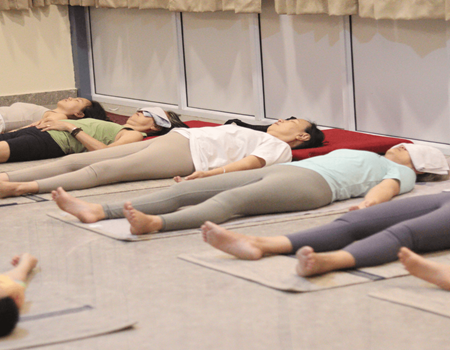
4. Relaxation (Savasana)
Every Hatha Yoga session ends with deep relaxation, allowing the body and mind to absorb the benefits of the practice.
Benefits of Hatha Yoga
Hatha Yoga offers a wide range of benefits for the body, mind, and spirit.
Physical Benefits
Regular practice can:
- Improve flexibility and mobility
- Build strength and muscle tone
- Enhance posture and balance
- Support overall physical health
Hatha Yoga works as a full-body workout while remaining gentle and accessible.
Mental Benefits
One of the biggest reasons people practice Hatha Yoga is for mental well-being.
It helps:
- Reduce stress and anxiety
- Improve concentration and clarity
- Promote relaxation and better sleep
Studies and wellness reports also show that yoga can significantly improve mental health and reduce stress levels.

Emotional & Spiritual Benefits
Beyond the physical and mental, Hatha Yoga also works on a deeper level:
- Increases self-awareness
- Promotes inner peace
- Connects you with your true self
- Helps manage emotions better
This is why many people describe yoga as a transformational experience, not just a workout.
What to Expect in a Hatha Yoga Class
A typical Hatha Yoga class follows a balanced structure:
Beginning (Warm-up)
- Gentle stretching
- Breathing awareness
Middle (Active Practice)
- Standing and seated postures
- Balance and strength poses
End (Relaxation)
- Cooling poses
- Final relaxation (Savasana)
Classes are usually slow-paced and focused on alignment, making them ideal for beginners.
Hatha Yoga vs Other Yoga Styles
Many people get confused between different yoga styles. Here’s a simple comparison:
Hatha Yoga
- Slow and steady
- Focus on alignment
- Beginner-friendly
Vinyasa Yoga
- Faster, flow-based
- Movement synchronized with breath
Ashtanga Yoga
- Structured and physically demanding
- Fixed sequence of poses
Hatha Yoga is often recommended as the starting point for beginners, as it builds a strong foundation.
Who Should Practice Hatha Yoga?
Hatha Yoga is suitable for almost everyone:
Beginners
Its slow pace makes it easy to learn.
People with Stress or Anxiety
Breathing and meditation help calm the mind.
Those Seeking Balance
It’s ideal for improving both physical and mental health.
Yoga Teachers in Training
Hatha Yoga forms the base of most teacher training programs.
Simple Hatha Yoga Practice Routine
If you’re starting at home, here’s a simple routine:
- Warm-up (5–10 minutes)
Gentle stretches and breathing - Asana Practice (20–30 minutes)
- Tadasana
- Downward Dog
- Warrior Pose
- Seated Forward Bend
- Pranayama (5–10 minutes)
Deep breathing or Anulom Vilom - Relaxation (5–10 minutes)
Savasana
Practicing regularly—even 20–30 minutes a day—can bring noticeable results.
Tips for Beginners
If you’re new to Hatha Yoga, keep these tips in mind:
- Start slowly and be consistent
- Focus on your breath
- Don’t force your body into poses
- Practice regularly
- Learn from experienced teachers
Yoga is not about perfection—it’s about awareness and growth.
Why Learn Hatha Yoga in Rishikesh
Rishikesh, known as the Yoga Capital of the World, offers a unique environment for learning yoga.
Here, you can experience:
- Authentic teachings
- Traditional yoga philosophy
- Peaceful Himalayan surroundings
- Spiritual atmosphere
Learning Hatha Yoga in such an environment can deepen your understanding far beyond physical practice.
Why Choose Om Shanti Om Yoga Ashram
If you are looking to learn authentic Hatha Yoga, Om Shanti Om Yoga Ashram in Rishikesh offers a complete experience.
Here’s what makes it special:
- Traditional Hatha Yoga teaching
- Yoga Alliance certified courses
- Experienced Indian teachers
- Supportive and family-like environment
- Balanced focus on physical and spiritual growth
The ashram provides a space where students can grow not only as practitioners but also as individuals.

Conclusion
Hatha Yoga is more than just a form of exercise—it is a complete system of self-development that brings balance to the body, mind, and spirit.
Whether you are a beginner or an experienced practitioner, Hatha Yoga offers something valuable for everyone. Its gentle yet powerful approach makes it one of the most effective ways to improve your overall well-being.
By practicing regularly, you can experience:
- Better health
- Reduced stress
- Greater clarity
- Inner peace
Start Your Yoga Journey
If you feel called to deepen your practice or become a certified yoga teacher, you can join:
- 100 Hour Yoga Teacher Training
- 200 Hour Yoga Teacher Training
- 300 Hour Yoga Teacher Training
- 500 Hour Yoga Teacher Training
At Om Shanti Om Yoga Ashram, you will experience authentic Hatha Yoga in its true birthplace.








0 Comments
No comments yet. Be the first to comment!