


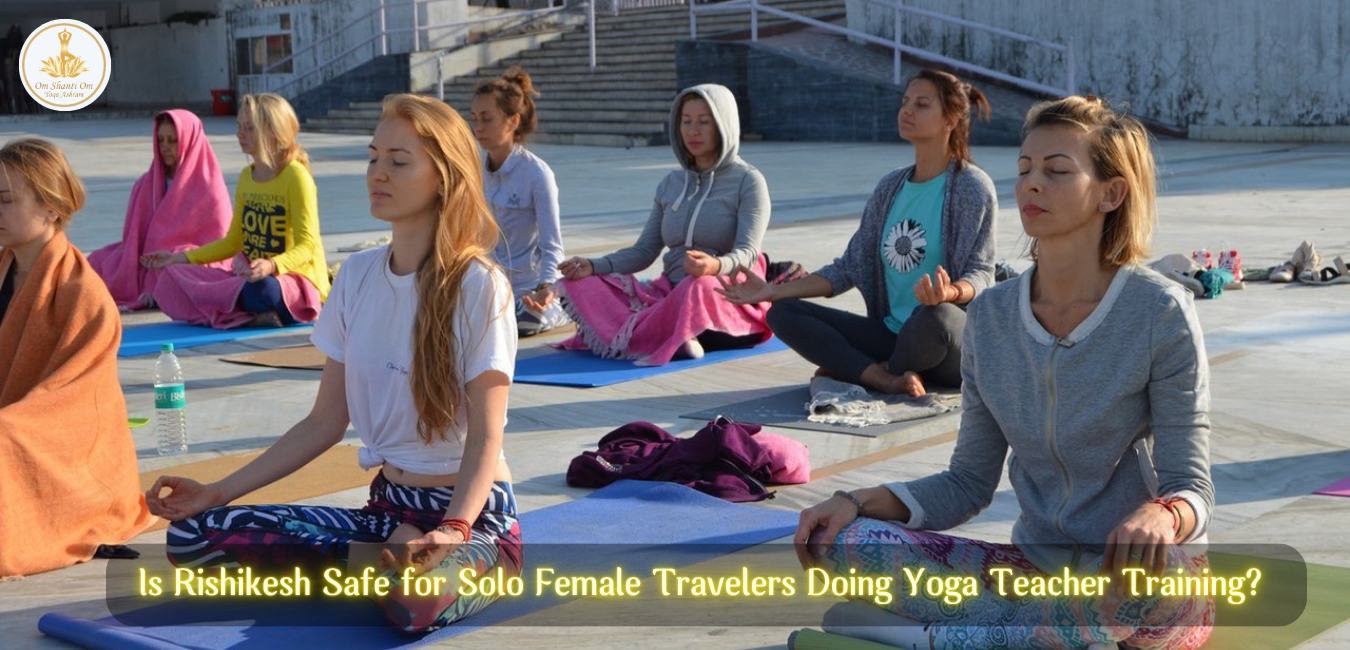
An honest, practical guide for women ready to leap — without the sugar-coating.
There's a moment that happens to almost every woman who starts researching yoga teacher training in Rishikesh. You're deep into reading about sunrise meditations on the Ganges, ancient ashrams, and mountain air that smells like incense and marigolds — and then you pause. You open a new tab. You type: "Is Rishikesh safe for solo female travelers?"
What comes back is a mixed bag. Some forums are reassuring. Others are alarming. A few are so vague they don't help at all. And suddenly the dream feels a little more complicated.
Here's the thing: Rishikesh is one of the most visited destinations in India for solo female travelers, and tens of thousands of women — from every corner of the world — complete yoga teacher trainings there every single year. Most of them come back with stories about transformation, sisterhood, and a city that got under their skin in the best possible way.
That doesn't mean you should go in with your eyes closed. It means you should go in prepared. This post is an honest look at the real safety picture in Rishikesh, practical tips to protect yourself, and why doing a YTT here might actually be one of the safer ways to experience India as a solo woman.

Why Rishikesh Draws Solo Women from Around the World
Before we talk about safety, it's worth understanding why so many women choose Rishikesh in the first place — because the pull is real and it's specific.
Rishikesh sits at the foothills of the Himalayas in Uttarakhand, where the Ganges rushes down from the mountains cold and clear before slowing into the sacred river that winds through the plains below. It has been a center of yoga and spiritual practice for centuries, and today it is home to hundreds of yoga schools, ashrams, and teachers representing virtually every tradition and style.
The city has been officially recognized as the "Yoga Capital of the World" — and while that title comes with a certain amount of commercial noise, it also means that the infrastructure for serious yoga study is genuinely unparalleled here. You can study Hatha, Ashtanga, Kundalini, Yin, or Vedic traditions with teachers who have spent decades in the practice. You can sit for evening Ganga Aarti — the nightly fire ceremony on the riverbanks — and feel something shift in you that's hard to name.
And practically speaking, Rishikesh offers world-class training at a fraction of what the same certification would cost in the US, UK, or Australia. For many women, it's the combination of quality, affordability, and spiritual atmosphere that makes it irresistible.
The question isn't really whether it's worth going. For most women who go, it clearly is. The question is how to go smartly.
The Honest Safety Picture
Let's not dance around it: India has a complicated reputation when it comes to the safety of women travelers. High-profile incidents in major cities have made headlines, and that context is real. But Rishikesh is not Delhi, Mumbai, or Kolkata. It occupies a genuinely different space in India's landscape.
Rishikesh is a holy city — a place of pilgrimage for Hindus, a destination for spiritual seekers, and a town deeply shaped by the ethics of the ashram culture that surrounds it. Alcohol is officially banned within the city. Meat is largely absent from menus. The dominant energy is one of devotion, study, and simplicity rather than nightlife or revelry. This doesn't make it perfect, but it does make it meaningfully calmer than most Indian urban centers.
What risks are real?
Street harassment does exist. Staring, unsolicited comments, and occasional catcalling happen — particularly in more tourist-heavy areas. This is uncomfortable and shouldn't be minimized, but it is generally low-level and manageable with awareness and confident body language.
Petty theft — pickpocketing, bag snatching near the river ghats, and scams targeting tourists — is occasional. A money belt, a basic level of street awareness, and not flashing expensive items dramatically reduce your exposure.
Tourist scams are present: overpriced rickshaws, fake "official" guides, and guesthouses that aren't what they advertised. These are navigable with research and skepticism.
Serious violent crime against tourists is rare in Rishikesh. It happens in the world, and no destination is entirely risk-free. But travelers' accounts and safety data consistently place Rishikesh among the safer destinations in India for solo women.
The most important thing to hold onto: the vast majority of women who travel to Rishikesh alone have positive, safe experiences. The preparation you do before and during your trip makes an enormous difference.

Neighborhood Breakdown: Where to Stay
Rishikesh isn't one uniform town — it's a collection of areas with distinct characters, and where you stay matters.
Tapovan is the neighborhood most associated with the international yoga community and is generally considered the best base for YTT students. It's walkable, well-lit, home to countless yoga schools, cafes, and wellness spaces, and has an established culture of solo female travelers. The streets are active during daytime and early evening, and you'll rarely feel isolated here.
Laxman Jhula and Ram Jhula are the iconic suspension bridge areas that many visitors picture when they think of Rishikesh. These are busy, tourist-friendly zones with strong infrastructure — pharmacies, ATMs, international restaurants, and an easy sense of community. They're great bases, though slightly more commercially oriented than Tapovan.
Swarg Ashram is quieter, more traditionally oriented, and heavily frequented by Indian pilgrims. It's very safe but has a more austere atmosphere and fewer conveniences for international travelers.
Staying within or adjacent to your training school's campus is the single best piece of advice for YTT students. Living inside the school removes the daily uncertainty of navigating the city alone, puts you immediately into community with your fellow students, and often includes meals, which simplifies your life considerably during an already intensive program.
Choosing the Right YTT School — Safety Starts with Your Research
One of the most overlooked aspects of safety as a solo female YTT student is this: the school you choose is a significant part of your safety infrastructure. A well-run, reputable school provides structure, community, and a built-in support system. A poorly run one can leave you feeling isolated and vulnerable.
Look for these indicators of a trustworthy school:
Female teachers or, at a minimum, female staff should be part of the faculty or administration. This isn't about excluding male teachers — many of the world's finest yoga instructors are men — but having women present in leadership signals that the school understands and respects the needs of female students.
Read reviews specifically from solo female students. Look on Google, Tripadvisor, and yoga-specific forums. What do women say about feeling safe, respected, and supported? These accounts are more valuable than marketing copy.
A clear curriculum, transparent pricing, and responsive communication before enrollment are all green flags. Schools that are vague about what's included, reluctant to answer questions, or apply high-pressure sales tactics should be approached with caution.
Accreditation matters too — a Yoga Alliance–registered school has met at least a baseline standard of curriculum and transparency, which provides some assurance, though not a guarantee of quality.
The hidden safety benefit of YTT: When you enroll in a teacher training, you are not truly traveling solo. From day one, you are part of a cohort — often 15 to 30 people from around the world — who eat together, practice together, and spend nearly every waking hour in shared study. The bonds that form in YTT programs are notoriously fast and deep. Many women describe finding their closest international friendships in the first week. You will have people looking out for you, and you will be looking out for them.

Practical Safety Tips for Solo Female Travelers
Beyond choosing the right school and neighborhood, here are the practical habits that experienced solo female travelers in Rishikesh consistently recommend:
Dress modestly and deliberately. This isn't about conforming to rules that shouldn't exist — it's about blending in respectfully in a cultural context where clothing carries meaning. Covering your shoulders and knees reduces the likelihood of unwanted attention significantly. Loose, lightweight layers work perfectly in Rishikesh's climate and fit naturally with the yoga community's aesthetic anyway. A dupatta (lightweight scarf) is useful both for modesty and as a temple covering.
Get a local SIM card on arrival. Indian SIM cards are inexpensive and easy to obtain with your passport at the airport or in town. Having mobile data gives you access to maps, translation, emergency contacts, and the ability to call your school or a trusted person instantly. Don't rely on Wi-Fi alone.
Share your schedule with someone at home. Let a trusted friend or family member know your school's address, your daily routine, and when to expect to hear from you. This is simple and costs nothing, but it creates an important safety net.
Keep someone in the loop on any solo excursions. Within the YTT context, you'll have plenty of structured activities. If you venture out independently — to a temple, a waterfall, or a nearby town — let a classmate or your school know where you're going and when you expect to return.
Avoid isolated areas after dark. The riverbanks, forested paths, and quieter ghats that are beautiful during the day feel different at night. Stick to well-lit, populated streets in the evening. Most YTT programs have an early schedule that naturally keeps students close to their accommodation after dinner — lean into that rhythm.
Be selective about transport. Pre-arranged transfers from your school, app-based rickshaws, or rides organized through your guesthouse are safer than flagging down an unknown driver alone at night. During daytime hours, shared autos and rickshaws are generally fine.
Trust your instincts without apology. If a situation feels wrong — a person who won't take no for an answer, a place that feels off, an invitation that raises a red flag — leave. You don't owe anyone an explanation. This is perhaps the most important habit of all, and experienced travelers name it consistently.
What Other Solo Female Travelers Actually Say
The most reliable data on safety isn't found in travel warnings — it's found in the accumulated experiences of the women who have actually been there.
Across travel forums, YTT review sites, and personal blogs, the dominant narrative from solo female travelers in Rishikesh is one of positive surprise. Women who arrived nervous describe leaving with a deep love for the city. The most common challenges mentioned are the cultural adjustment period (the pace, the sensory intensity, the navigation of a new environment), occasional staring or attention in more crowded areas, and the standard hustle of tourist-area touts.
Serious safety incidents are occasionally mentioned, and they matter — no account should be dismissed. But they are decidedly the minority. The far more common story is of women who felt held by the community of their YTT program, who navigated the city with growing confidence over the course of their month, and who returned home having experienced India not as a threatening place but as a profoundly alive one.
The YTT environment itself accelerates this. Within days of arriving, most students have a group of fellow women they trust, explore with, and look out for. Solo travel in Rishikesh for a YTT student often doesn't feel solo for long.
Cultural Sensitivity as a Safety Tool
One thing that experienced India travelers emphasize: cultural awareness isn't just respectful — it's protective.
Understanding that public displays of affection, loud or aggressive behavior, or dress that's considered provocative by local standards draws more attention than most Western travelers are accustomed to helps you navigate social situations more smoothly. This isn't victim-blaming — responsibility for harassment lies entirely with those who perpetrate it. But strategic cultural fluency genuinely reduces friction.
Learning even a handful of Hindi phrases — namaskar (respectful greeting), dhanyavaad (thank you), nahi chahiye (I don't want/need it) — earns goodwill and signals that you're not just passing through, that you've made some effort to meet the culture halfway. Locals respond to this warmly and consistently.
Being attentive to customs around temples and the Ganges — removing shoes, covering your head when requested, not turning your back to the river during ceremonies — shows respect and tends to ease social interactions in those spaces.
Emergency Contacts and Resources to Have Ready
Before you travel, save these and keep them accessible offline:
- Indian Emergency Number: 112 (police, ambulance, fire)
- Rishikesh Police Station: +91-135-243-0900
- Nearest hospitals: Himalayan Institute Hospital (Jolly Grant), AIIMS Rishikesh
- Your training school's 24/7 emergency contact
- Your country's embassy or consulate in India (find this on your government's travel website before departure)
- Your travel insurance emergency line — and yes, comprehensive travel insurance with medical evacuation coverage is non-negotiable for India travel
Store these in your phone, write them in a notebook, and email them to yourself. The goal is to never need them — but to have them instantly available if you do.

The Bottom Line
Rishikesh is not a risk-free destination. Nowhere is. But it is, by most honest measures, one of the most accessible and manageable entry points into India for solo female travelers — and the structure of a yoga teacher training makes it even more so.
The women who thrive there are not the ones who were fearless. They're the ones who did their research, chose their school carefully, packed their cultural awareness alongside their yoga mat, and stayed present and alert without letting caution harden into fear.
Thousands of women make this journey every year. They do their 200 hours. They chant on the riverbanks at dusk. They climb into cold mountain springs on day trips. They find teachers who change the way they see their practice, and classmates who become lifelong friends.
If Rishikesh is calling you, it's worth listening. Go prepared. Go with your eyes open. And go knowing that the experience waiting for you on the other side of that fear is likely far richer than anything you can imagine from the safety of home.
Start Your Yoga Journey
If you feel inspired to explore Ashtanga Yoga more deeply, you can join:
- 100 Hour Yoga Teacher Training
- 200 Hour Yoga Teacher Training
- 300 Hour Yoga Teacher Training
- 500 Hour Yoga Teacher Training
At Om Shanti Om Yoga Ashram in Rishikesh, you will experience yoga in its most authentic and traditional form.












0 Comments
No comments yet. Be the first to comment!