



There's something that happens when you tell people you're thinking about doing your yoga teacher training in Rishikesh. Their eyes widen slightly. Maybe they nod with a kind of quiet respect. Maybe they say, "Wow, that's the real deal."
Rishikesh carries a weight that other destinations simply don't. It sits at the foothills of the Himalayas, along the banks of the sacred Ganges River, in the northern Indian state of Uttarakhand. For centuries, it has been a gathering place for seekers, sages, and students of yoga. The Beatles came here in 1968. Swami Sivananda built a legacy here. Tens of thousands of yoga practitioners make the pilgrimage every year, many of them to train, to study, and to transform.
But in 2026, with more yoga teacher training programs available globally than ever before — online, hybrid, local, international — the question deserves a straight answer: is doing your 200-hour YTT in Rishikesh actually worth it?
This isn't a travel brochure. It's an honest assessment — the benefits, the challenges, the costs, and the kinds of people for whom Rishikesh is genuinely the right choice.
Why Rishikesh? Understanding the Pull
Before we get into the practical details, it helps to understand why Rishikesh became the global center of yoga teacher training in the first place — because it wasn't by accident or clever marketing.
Yoga didn't originate in Rishikesh, but the city has been one of its most important living hubs for well over a century. The confluence of the Ganges and the foothills of the Himalayas created a natural environment that yogis and ascetics were drawn to for meditation, practice, and study. Ashrams followed. Teachers established lineages. Institutions took root.
When Yoga Alliance began formalizing international certification standards in the early 2000s, Rishikesh schools were among the first to register — and many of the senior teachers leading programs here had decades of authentic, traditional training behind them. That combination of historical depth and institutional credibility gave Rishikesh a reputation that has held firm.
Today, a certification earned in Rishikesh carries a certain weight — not just because of the Yoga Alliance registration, but because the yoga community globally understands what it means to have trained there. That context matters, especially if you intend to teach internationally.
What a 200-Hour YTT in Rishikesh Actually Looks Like
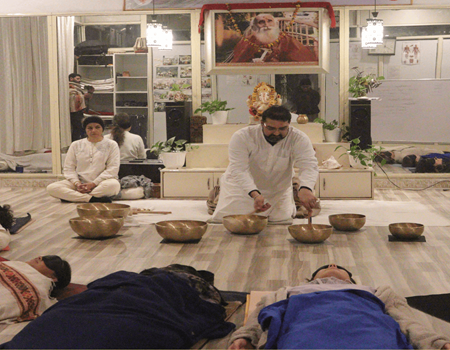
Most 200-hour programs in Rishikesh run as intensive residential trainings, typically spanning 28 to 30 days. You live on campus or in school-affiliated accommodation. Meals are provided — usually vegetarian, in keeping with yogic dietary principles. Your days are structured from early morning until evening, with very little unscheduled time.
A typical day might look something like this:
- 6:00 AM — Morning meditation and pranayama
- 7:30 AM — Asana practice (often two to three hours)
- 10:00 AM — Breakfast
- 11:00 AM — Anatomy or philosophy lecture
- 1:00 PM — Lunch and rest
- 3:00 PM — Teaching methodology or practicum session
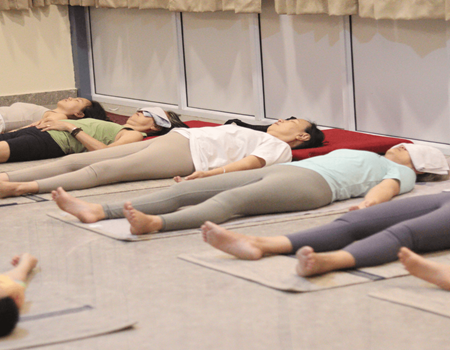
- 5:00 PM — Evening asana or restorative practice
- 7:00 PM — Dinner and self-study
The curriculum covers the standard Yoga Alliance requirements: asana technique and alignment, pranayama and breath work, yoga philosophy and the foundational texts, anatomy and physiology, and teaching methodology, including how to sequence, cue, adjust, and hold space for students.
Upon completion, graduates receive a certificate from their Yoga Alliance Registered Yoga School (RYS), which allows them to register with Yoga Alliance as a Registered Yoga Teacher (RYT-200) — a credential recognized by studios and employers worldwide.
The Cost Breakdown: What You're Actually Paying For
Let's talk numbers, because cost is one of the first things people ask about — and one of the most misunderstood aspects of training in Rishikesh.
Program fees in 2026 typically range from:
- Budget programs: $800–$1,200 USD (shared accommodation, basic facilities)
- Mid-range programs: $1,200–$2,000 USD (better facilities, smaller class sizes, more experienced faculty)
- Premium programs: $2,000–$3,500 USD (private or semi-private rooms, highly credentialed teachers, additional workshops)
Most programs include accommodation and three vegetarian meals per day, course materials, and certification upon graduation. That's a significant inclusion — when you factor in what you'd pay separately for a month of accommodation and food, even in budget-friendly Rishikesh, the all-inclusive nature of most programs represents strong value.
Travel costs are the bigger variable. Flights from Europe or North America to Delhi — the nearest major international airport — typically run $600–$1,200 USD depending on season and booking lead time. From Delhi, Rishikesh is approximately a five to six-hour drive or a combination of train and taxi. Budget $50–$100 USD for that leg.
Additional costs people often overlook: travel insurance (essential — don't skip this), a tourist visa for India (around $25–$80 depending on your nationality), any vaccinations recommended for travel, and personal spending money for excursions, shopping, or experiences outside the program.
The comparison that surprises most people: a mid-range 200-hour YTT in the United States or the United Kingdom, without accommodation or meals included, often costs $3,000–$5,000 USD or more. Even with flights, a high-quality Rishikesh program frequently comes in below that total — and includes a month of living expenses.
For many people, Rishikesh isn't just spiritually compelling. It's also the more financially accessible option.
The Genuine Benefits of Training in Rishikesh
Beyond the cost and the credential, there are qualities of training in Rishikesh that simply cannot be replicated elsewhere — and they're worth naming clearly.
Total immersion. When you train in your home city, you're still a version of your regular self. You go home at night. You check your phone. You slip back into your routines and relationships. In Rishikesh, that option doesn't exist. You are entirely in the practice, from morning to night, for a month. That level of immersion accelerates growth in ways that part-time or local programs rarely can.
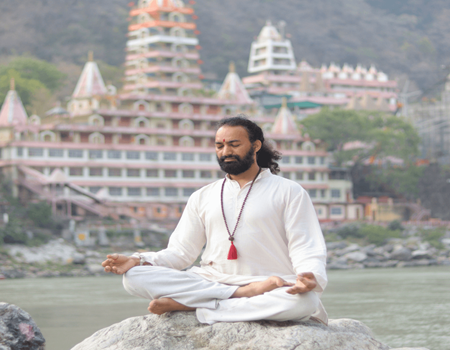
The environment itself. There is something genuinely difficult to describe about practicing yoga on the banks of the Ganges, with the Himalayas rising behind you and the sound of temple bells drifting across the water at dusk. It isn't mystical marketing — it's the accumulated effect of a place that has held the energy of spiritual practice for centuries. Most people who train in Rishikesh describe the environment as one of the most powerful aspects of the experience.
Access to traditional lineages. Many of the senior teachers in Rishikesh were trained by teachers who were trained by teachers — a living transmission of knowledge that stretches back through the modern history of yoga. That lineage gives the teachings a depth and authenticity that is genuinely harder to find in newer, Westernized programs.
International community. Your cohort in Rishikesh will likely include students from twenty or thirty different countries. The friendships and networks formed over a month of shared intensity — shared early mornings, shared struggles, shared transformation — tend to be unusually deep and lasting.
Personal transformation beyond the curriculum. Being removed from your ordinary life, placed in a spiritually charged environment, and asked to practice deeply every day does something to a person. Almost everyone who completes a YTT in Rishikesh describes returning home changed — not just more knowledgeable about yoga, but more themselves. That's harder to quantify than a Yoga Alliance credential, but it might be the most valuable thing the experience offers.
Honest Challenges You Should Know About
A balanced assessment requires honesty about the difficulties, too.
The climate takes adjustment. Rishikesh can be hot and humid, particularly from March through June. The best seasons for training are generally September through November and February through April — milder temperatures, cleaner air, manageable humidity. If you're choosing your timing, research the seasonal climate carefully.
Culture shock is real. India operates on its own rhythms. The food is different, the noise levels are different, and the pace of daily life is different. Some people fall in love with it immediately. Others find the first week genuinely disorienting. Give yourself grace, stay hydrated, be careful about street food until your system adjusts, and approach the unfamiliarity with curiosity rather than resistance.
Quality varies enormously between schools. This is perhaps the most important practical warning. Rishikesh has hundreds of yoga schools, and they are not all equal. The growth of the YTT market has attracted schools that are more interested in filling cohorts than in the quality of their teaching. Some programs have inexperienced faculty, overcrowded classes, and superficial curricula. Doing your research before enrolling is not optional — it's essential.
Jet lag and travel fatigue. Most intensives begin within a day or two of arrival. Coming from a long-haul destination, your body will be adjusting to a significant time zone change while simultaneously beginning a physically and mentally demanding program. Build in an extra arrival day if at all possible.
Distance from home. Being far from your support network — your family, your friends, your familiar comforts — while undergoing an emotionally intensive experience can be harder than anticipated. Most people find the community within the program fills that gap beautifully. But it's worth knowing going in.
How to Choose a Legitimate School in Rishikesh
Given the variation in quality, knowing how to evaluate a school is genuinely important.
Verify Yoga Alliance registration. Every legitimate Yoga Alliance Registered Yoga School (RYS) is listed in the publicly searchable directory on the Yoga Alliance website. Before paying any deposit, search the school by name and confirm their registration is current and in good standing.
Research the teaching faculty. Who are the lead instructors? What are their qualifications and training backgrounds? How many years have they been teaching? Are they listed on the school's website with verifiable credentials? Faculty quality is the single biggest determinant of program quality.
Look for genuine, detailed reviews. Not just star ratings — read the actual text of reviews on Google, on dedicated yoga forums, and on platforms like Course Report or YogaTrail. Look specifically for reviews from students who trained in the last two years. Pay attention to comments about faculty responsiveness, curriculum depth, accommodation quality, and how the school handled problems.
Watch for red flags. Prices significantly below the market average for comparable programs are worth scrutinizing — they often reflect corners being cut. Vague or generic curriculum descriptions, no verifiable alumni feedback, high-pressure sales tactics, and unresponsive communication before enrollment are all warning signs.
Ask direct questions. Email the school and ask: What is the maximum class size? Who are the lead teachers for this cohort? Can you connect me with a recent graduate? A school that answers these questions clearly and promptly is one that takes its students seriously.
Who Is Rishikesh YTT Best Suited For?
Rishikesh is a particularly strong choice for:
- People who want deep immersion and know that distance from ordinary life will accelerate their growth
- Those seeking traditional, lineage-based teachings rather than purely contemporary or Westernized yoga
- Budget-conscious practitioners who want high-quality training without the high prices of Western programs
- Solo travelers and independent spirits who are comfortable — or excited — to step into an unfamiliar environment
- Anyone for whom the spiritual dimension of yoga matters and who wants an environment that honors it
It may be less ideal for those who need flexibility around timing, those with health conditions that don't suit the climate or intensity, or those for whom being far from family for a month isn't currently realistic.
Is Rishikesh Still Worth It in 2026?
The YTT market has grown enormously. Online programs, hybrid formats, and local certifications have made teacher training more accessible than ever. So does Rishikesh still hold its own?
The honest answer is yes — for the right person, with the right school.
What Rishikesh offers cannot be downloaded or replicated in a weekend workshop. The immersion, the environment, the traditional depth of teaching, the international community, and the personal transformation that comes from dedicating a full month of your life to the practice — these remain genuinely unique. The credential is respected globally. The experience tends to stay with people for life.
The key qualifier is school selection. The gap between the best programs in Rishikesh and the worst has widened as the market has grown. Doing your research — verifying credentials, reading reviews, talking to alumni — is more important now than it was five years ago.
Do that work carefully, choose well, and yes: a 200-hour yoga teacher training in Rishikesh in 2026 is absolutely worth it.
Start Your Yoga Journey
If you feel inspired to explore Ashtanga Yoga more deeply, you can join:
- 100 Hour Yoga Teacher Training
- 200 Hour Yoga Teacher Training
- 300 Hour Yoga Teacher Training
- 500 Hour Yoga Teacher Training
At Om Shanti Om Yoga Ashram in Rishikesh, you will experience yoga in its most authentic and traditional form.











0 Comments
No comments yet. Be the first to comment!