


Anxiety is a sensation created by the translation of the information in the brain.
The reason anxiety is felt comes from information that is processed by thinking in a specific pattern. The information can either come from outside the individual (through senses), or from the inside (through cognition). Yoga has been known for millennia as practices to gain mastery over body and mind, which would elude states of anxiety.
To understand why Yoga is a beneficial cure to anxiety, it is relevant to point out how and why anxiety can be experienced. Anxiety is defined as a strong unpleasant feeling, usually persisting, that is perceived as fear, hurting over-thinking, and distress. Eventually, it affects both mental and physical states. Frequent and fluctuant states of anxiety can result in severe depression, suicidal thoughts, and feelings of hopelessness. This is how the mind can become a very strong trickster. Anxiety is proven to arise from irrational thinking. But why would somebody think irrationally?

Well, it comes from mental habits or patterns that become frequent in one individual's life. These patterns can be on the conscious level or deeper on the subconscious level. Life often creates cycles, and as humans perceive pleasant and unpleasant sensations, similarly these cycles can become virtuous (positive) or vicious (negative). Anxiety takes place into the mind by shaping these vicious cycles. It is the habit of perceiving life and creating fear.
- Anxiety is a very common problem in modern western culture, and statistics show that an increasing amount of people experience it.
- But as beautiful as life is, solutions to this state exist in various shapes.
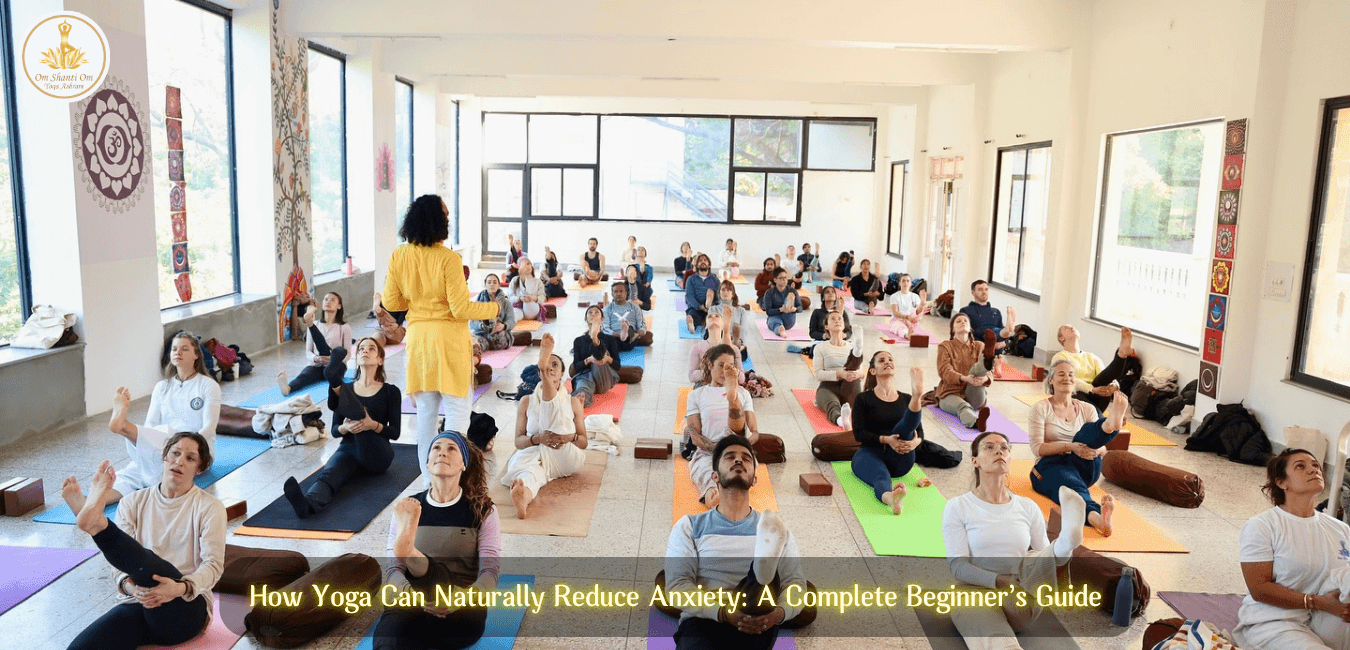
- Yoga offers a complete approach to life, especially about health. It's teaching everyday new practitioners how to avoid anxiety and learn to get rid of it for good!
- In other words, Yoga teaches how to transform negative cycles into healthy and positive ones!
- Here are some examples based on yoga philosophy to get back the control of an overthinking mind.
Very often, anxiety comes because the mind and the whole individual has too much focus out of the present moment, losing itself into the past or future. Whenever anxiety shows up, focusing on only one specific sense will help reconnect to the present moment. Like taking 30 seconds to only focus on what can be smelled, and then another 30 seconds on what can be heard, and so on with each sense. It can be repeated for several rounds. This simple reconnection to present and the senses is very helpful to get rid of anxiety. In order to get rid of it for good, it's important to understand one's own reason for this anxiety. Therefore, the whole pattern can gently be transformed from hurting to pleasant. Yoga offers practices such as mantra chanting, where singing positive words in repetition boost energy levels and allows negativity to fly away. Meditation teaches us to detach from physical and mental realms and realize that nothing is forever. Thus, the habit of having unhealthy attachments slowly fades, with it the recurrent anxiety.

Also Read: 200 Hour Yoga Teacher Training in Rishikesh, India
The idea is to create positive mental habits and take care of the body as it directly impacts the mental state. A shift in nutrition can also be a good step towards remission. As healthy routines are keys, yoga offers the practice of asanas, which are sequences of physical stretching and lifting based on daily activity. The most known remedy to anxiety concerns gratitude! Taking time to thank whatever can make a person feel good has proven itself to be the most effective cure to anxiety. Gratitude is the creation of a mental pattern and habit where positivity is expressed from nothing… just because it has the right to exist. Slowly anxiety will fade to become an old memory to laugh about, and spread awareness.
Namaste!







0 Comments
No comments yet. Be the first to comment!