


Breathing is one of the most natural and essential processes of life. From the moment we are born until our final breath, the respiratory system works continuously to keep our body alive and functioning. Without breathing, human life cannot exist for more than a few minutes. In fact, if the body does not receive oxygen for about three minutes, the brain begins to suffer serious damage.
The respiratory system allows us to breathe, speak, and maintain the balance of oxygen and carbon dioxide in our body. Every breath we take delivers oxygen to our blood and removes carbon dioxide, a waste product produced by our cells.
But breathing is not just a biological function. According to yogic philosophy, the way we breathe greatly affects our physical health, mental clarity, and emotional stability. Through practices like Pranayama, yoga teaches us how to control and expand the power of breath to achieve better health and inner balance.
In this article, we will explore the structure, functions, interesting facts, and common diseases of the respiratory system, as well as how yogic breathing techniques help improve respiratory health.
What is the Respiratory System?
In simple terms, the respiratory system is the group of organs that allows us to breathe. It helps the body take in oxygen from the air and remove carbon dioxide.
Breathing may seem effortless, but it is actually a complex process involving multiple organs and muscles working together. The respiratory system ensures that oxygen reaches every cell in the body, enabling them to produce energy and function properly.
Without oxygen, the body cannot survive. That is why breathing is one of the most critical life-supporting functions.
How the Respiratory System Works
The process of breathing begins when we inhale air through the nose or mouth.
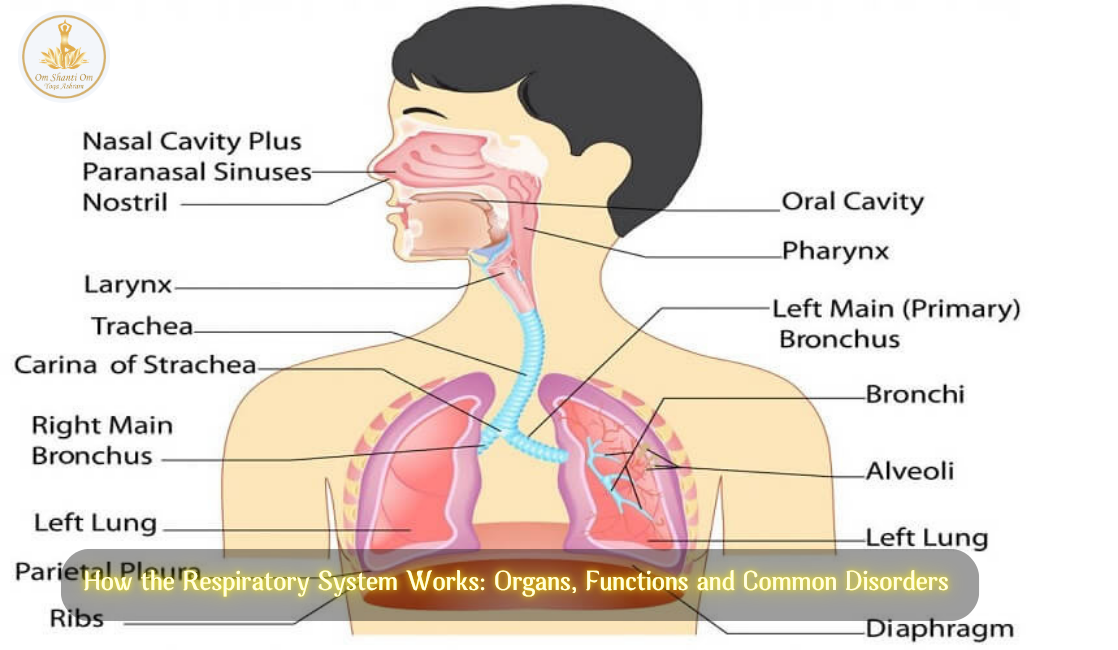
- Air enters through the nose, where it is filtered, warmed, and moistened.
- The air then passes through the pharynx (throat).
- From the pharynx, it moves into the larynx, also known as the voice box.
- The air then travels through the trachea (windpipe).
- The trachea divides into two tubes called bronchi, which enter the lungs.
- Inside the lungs, the bronchi branch into smaller tubes called bronchioles.
- At the end of these bronchioles are tiny air sacs called alveoli.
These alveoli are extremely important because they allow the exchange of gases between the lungs and the blood.
Oxygen from the inhaled air passes into the capillary beds surrounding the alveoli. The oxygen then enters the bloodstream and is transported to cells throughout the body.
At the same time, carbon dioxide from the blood moves into the alveoli and is removed when we exhale.
This process happens continuously and automatically throughout our lives.
Organs of the Respiratory System
The respiratory system is made up of several organs that work together to ensure smooth breathing.
Nose and Nasal Cavity
The nose is the primary entry point for air. It filters dust and microorganisms using tiny hairs and mucus. It also warms and humidifies the air before it reaches the lungs.
Pharynx
The pharynx connects the nasal cavity to the larynx and acts as a passageway for both air and food.
Larynx
The larynx is commonly called the voice box. It contains the vocal cords, which produce sound when air passes through them. This is how we speak.
Trachea
The trachea is a strong tube supported by cartilage rings that carries air from the throat to the lungs.
Bronchi and Bronchioles
The trachea divides into two bronchi, which enter each lung. These bronchi further divide into smaller bronchioles that distribute air throughout the lungs.
Lungs
The lungs are the main organs of respiration. They contain millions of alveoli where oxygen and carbon dioxide exchange occurs.
Diaphragm
The diaphragm is a large muscle located beneath the lungs. It plays a key role in breathing by expanding and contracting the chest cavity.
Interesting Facts About the Respiratory System
The respiratory system is truly fascinating. Here are some interesting facts about it:
- An average adult breathes around 20,000 times per day.
- The lungs contain approximately 300 million alveoli.
- The total surface area of the lungs is roughly the size of a tennis court.
- Breathing is controlled automatically by the brainstem.
- The right lung is slightly larger than the left lung.
- Sneezing can release air at speeds of up to 160 km per hour.
These facts show how powerful and complex the respiratory system really is.
How Breathing Affects Our Health
A person's health greatly depends on the way they breathe.
Many people today breathe shallowly due to stress, poor posture, and sedentary lifestyles. Shallow breathing limits the amount of oxygen reaching the body.
When the body receives less oxygen, it can lead to fatigue, anxiety, and poor concentration.
Stress also affects breathing patterns. When we feel stressed or anxious, we tend to take short and rapid breaths. This causes tension in the chest and reduces oxygen flow to the body.
In contrast, deep breathing allows the lungs to expand fully and improves oxygen supply to the brain and muscles. This leads to relaxation, mental clarity, and better emotional balance.
This is why yogic breathing practices emphasize conscious and controlled breathing.
What is Pranayama?
In yogic science, breathing is more than just inhaling and exhaling air. It is connected to Prana, the vital life energy that flows through the body.
The word Pranayama is made up of two Sanskrit words:
- Prana – life force or vital energy
- Ayama – expansion or extension
Together, Pranayama means the expansion and control of life energy through breathing.
Pranayama techniques help regulate the breath, increase oxygen supply, and balance the body and mind.
Through regular practice, Pranayama removes blockages in the body's energy channels, allowing prana to flow freely.
This improves both physical health and mental well-being.
Benefits of Pranayama for the Respiratory System
Practicing Pranayama regularly provides many benefits for the respiratory system.
Improves Lung Capacity
Deep breathing exercises expand the lungs and increase their capacity to hold oxygen.
Strengthens Respiratory Muscles
Pranayama strengthens the diaphragm and other breathing muscles, making breathing more efficient.
Reduces Stress
Controlled breathing activates the parasympathetic nervous system, which promotes relaxation and reduces stress.
Improves Oxygen Supply
Pranayama enhances oxygen circulation throughout the body, helping cells function better.
Clears the Respiratory Tract
Breathing exercises help remove mucus and toxins from the respiratory passages.
Anulom Viloma: A Powerful Yogic Breathing Technique
One of the most effective Pranayama techniques for respiratory health is Anulom Viloma, also known as alternate nostril breathing.
This technique involves inhaling through one nostril and exhaling through the other while using the fingers to control airflow.
Anulom Viloma helps:
- balance the nervous system
- reduce stress and anxiety
- improve oxygen flow
- calm the mind
- enhance concentration
When practiced regularly, it promotes deep relaxation and emotional stability.
Kapalbhati Pranayama and Its Benefits
Another important breathing technique is Kapalbhati Pranayama.
Kapalbhati is a cleansing breathing technique that involves forceful exhalations and passive inhalations. It is known as a purification practice in yoga.
This technique offers many health benefits.
Improves Digestion
The strong abdominal movement during Kapalbhati stimulates digestive organs and improves metabolism.
Strengthens Abdominal Muscles
The repetitive contractions of the abdomen strengthen core muscles.
Cleans the Respiratory Tract
Kapalbhati helps clear mucus from the respiratory passages and improves lung function.
Supports Kidney and Reproductive Health
The rhythmic abdominal movements stimulate organs such as the kidneys and uterus, improving their function.
Improves Lung Strength
Regular practice strengthens the lungs and enhances breathing capacity.
Supports Eye Health
Some yoga traditions believe Kapalbhati improves blood circulation to the eyes and supports better vision.
Improves Mental Health
On an emotional level, Kapalbhati generates feelings of happiness and positivity. It can help reduce anxiety and depression.
Because of its powerful effects, Kapalbhati should be practiced under proper guidance, especially for beginners.
Common Respiratory Diseases
Despite the efficiency of the respiratory system, it can be affected by various diseases.
Some common respiratory conditions include:
Asthma
Asthma causes inflammation and narrowing of the airways, making breathing difficult.
Bronchitis
Bronchitis occurs when the bronchial tubes become inflamed, leading to coughing and mucus production.
Pneumonia
Pneumonia is a lung infection that fills the alveoli with fluid, making breathing difficult.
Chronic Obstructive Pulmonary Disease (COPD)
COPD is a long-term lung disease that includes conditions like emphysema and chronic bronchitis.
Tuberculosis
Tuberculosis is a bacterial infection that mainly affects the lungs.
These diseases can significantly affect breathing and overall health.
How to Keep Your Respiratory System Healthy
Maintaining respiratory health is essential for overall well-being. Here are some simple ways to protect your lungs.
Practice Yoga and Pranayama
Regular breathing exercises improve lung capacity and respiratory strength.
Avoid Smoking
Smoking damages lung tissues and significantly increases the risk of respiratory diseases.
Exercise Regularly
Physical activity improves lung efficiency and oxygen circulation.
Maintain Good Air Quality
Avoid polluted environments whenever possible.
Practice Deep Breathing
Taking a few minutes each day to practice deep breathing can greatly improve respiratory health.
Conclusion
The respiratory system plays a vital role in keeping the body alive and healthy. Every breath we take supplies oxygen to our cells and removes carbon dioxide from the body.
Understanding how the respiratory system works helps us appreciate the importance of proper breathing.
Modern lifestyles often lead to shallow breathing, stress, and reduced oxygen flow. However, ancient yogic practices like Pranayama, Anulom Viloma, and Kapalbhati offer powerful tools to improve breathing and restore balance in the body.
By practicing conscious breathing and maintaining a healthy lifestyle, we can strengthen our lungs, reduce stress, and improve our overall well-being.
Breathing is not just a physical act—it is a bridge between the body, mind, and life energy.
Start Your Journey to Become a Certified Yoga Teacher
If you are looking for a professional Yoga Teacher Training Program or want to become a Yoga Alliance Certified Yoga Teacher, you are warmly welcome to join Om Shanti Om Yoga Ashram in Rishikesh, India.
Om Shanti Om Yoga Ashram is one of the traditional yoga schools in Rishikesh, founded by Swami Yogananda Maharaj Ji. Our programs combine authentic yogic wisdom with modern teaching methods, helping students develop deep knowledge of Hatha Yoga, Ashtanga Yoga, Pranayama, Meditation, Yoga Philosophy, Anatomy, and Teaching Methodology.
Located in the peaceful spiritual environment of Rishikesh – the Yoga Capital of the World, our courses are designed for beginners, yoga practitioners, and aspiring yoga teachers from around the globe.
Our Popular Yoga Courses
- 100 Hour Yoga Teacher Training in Rishikesh – Perfect for beginners starting their yoga journey.
- 200 Hour Yoga Teacher Training in Rishikesh – The most popular Yoga Alliance certified course to become a professional yoga teacher.
- 300 Hour Yoga Teacher Training in Rishikesh – Advanced yoga training to deepen your knowledge and teaching skills.
- 500 Hour Yoga Teacher Training in Rishikesh – A complete intensive program for mastering yoga practice and teaching.
- Sound Healing Course in Rishikesh – Learn the healing power of sound therapy and meditation.
- Meditation and Pranayama Courses – Improve mental clarity, relaxation, and breathing awareness.
Our experienced teachers guide students through a transformative journey of physical practice, spiritual growth, and self-discovery.
If you dream of becoming a certified yoga teacher or simply want to deepen your yoga practice, Om Shanti Om Yoga Ashram offers the perfect place to begin your journey.








0 Comments
No comments yet. Be the first to comment!