


Have you ever rolled up your yoga mat after class and thought Could I actually teach this? Could I be the one at the front of the room, guiding others through their breath and movement?
If that thought has crossed your mind even once, you are not alone. Every year, thousands of people from around the world make the decision to turn their passion for yoga into a profession. And India — especially Rishikesh — is where most of them choose to begin that journey.
But one of the first questions almost everyone asks is: how long does it actually take?
The honest answer is: it depends on the path you choose. The shortest route to becoming a certified yoga teacher is a 200-hour Yoga Teacher Training (TTC) course, which takes approximately 24 to 28 days when done as a full-time residential program in India. But there is more to the story than just the number of days.
In this guide, we break everything down — from the different certification levels to what your days actually look like inside an ashram — so you can make an informed decision about your own journey.

What Does 'Certified Yoga Teacher' Actually Mean?
Before we talk about timelines, it helps to understand what kind of certification we are actually talking about.
When most people say they want to become a "certified yoga teacher," they usually mean they want a qualification that is recognised internationally — one they can use to teach students in any country, apply for jobs at yoga studios, or build a freelance career around. That kind of certification comes from Yoga Alliance USA.
Yoga Alliance is the largest nonprofit organisation in the world for yoga educators. It sets the global standards for yoga teacher training and maintains a registry of qualified teachers and schools. When a school is registered with Yoga Alliance (known as an RYS — Registered Yoga School), its graduates receive internationally recognised credentials:
- RYT 200 — Registered Yoga Teacher with 200 hours of training
- RYT 300 — Registered Yoga Teacher with 300 additional hours
- RYT 500 — The highest level, combining 200 and 300 hours
Om Shanti Om Yoga Ashram in Rishikesh is a Yoga Alliance-registered school at RYS 200, 300, and 500 levels — meaning every certificate issued here carries genuine global recognition.
There is also a school-level certificate, which is what shorter programs (like a 100-hour TTC) provide. These are valuable for personal growth and foundational learning, but they are not Yoga Alliance certified.
A Clear Breakdown: Training Levels and How Long Each Takes
Here is a simple overview of each path, so you know exactly what you are signing up for:
|
Course |
Duration |
Level |
Certification |
|
100 Hour TTC |
14 Days |
Beginner |
School Certificate |
|
200 Hour TTC |
24–28 Days |
Beginner–Intermediate |
Yoga Alliance RYT 200 |
|
300 Hour TTC |
33 Days |
Advanced |
Yoga Alliance RYT 300 |
|
500 Hour TTC |
55 Days |
Advanced |
Yoga Alliance RYT 500 |
|
Online 200 Hr TTC |
Up to 12 Months |
Flexible/Self-paced |
Yoga Alliance RYT 200 |
Let us go deeper into each one.
100-Hour Yoga Teacher Training — 14 Days
The 100-hour TTC is the starting point for complete beginners who want to build a serious foundation in yoga without committing to a full month. Over 14 days, you cover the basics of asana practice, an introduction to pranayama (breathwork), yoga philosophy, and how the body works in relation to movement.
The outcome is a school-level certificate from Om Shanti Om Yoga Ashram. It will not give you a Yoga Alliance credential, but it is a meaningful achievement — and many students use it as a stepping stone before enrolling in the 200-hour course.
200-Hour Yoga Teacher Training — 24 to 28 Days (The Gold Standard)
This is the most popular path, and for good reason. The 200-hour TTC is the internationally recognised baseline for anyone who wants to teach yoga professionally. Once you complete it and register with Yoga Alliance, you officially become an RYT 200 — a Registered Yoga Teacher.
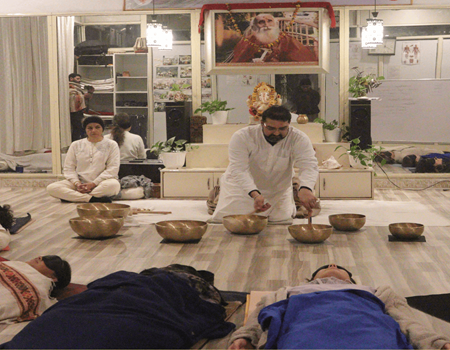
At Om Shanti Om Yoga Ashram, the 200-hour course runs for 24 days (with one complimentary night included). The curriculum covers Hatha yoga, Ashtanga Vinyasa, pranayama, meditation, yoga philosophy, anatomy and physiology, teaching methodology, mantra chanting, sound healing, and more.
This program is designed for both beginners and those with some yoga experience. You do not need to be a flexible person or a seasoned practitioner to join. What you need is an open mind and a willingness to commit fully for those four weeks.
300-Hour Yoga Teacher Training — 33 Days
The 300-hour course is the natural next step for those who have already completed their 200-hour training. It is designed for intermediate to advanced practitioners who want to deepen their understanding and expand their teaching skills.
The curriculum goes further into advanced asana sequences, therapeutic applications of yoga, deeper yoga philosophy, and specialised areas of practice. Upon completion, combined with your 200-hour certification, you qualify for the RYT 500 designation from Yoga Alliance — the highest level of recognition available.
500-Hour Yoga Teacher Training — 55 Days
If you want to complete the full journey in one go, the 500-hour TTC at Om Shanti Om runs for 55 days (just under two months). This combines the content of both the 200-hour and 300-hour programs into a single immersive experience.
This is the most comprehensive training available. By the end of it, you will have the knowledge, skills, and globally recognized credentials to teach yoga anywhere in the world at a professional level.
Online 200-Hour Yoga Teacher Training — Up to 12 Months
Not everyone can travel to Rishikesh, and that is completely fine. Om Shanti Om offers a fully accredited Online 200-Hour Yoga Teacher Training Course, which can be completed at your own pace over a period of up to 12 months.
The online program includes 300+ pre-recorded video lessons, six live classes per week with experienced teachers, a detailed guidebook with over 200 pages of material, and recorded sessions you can revisit at any time. The certification you receive is the same Yoga Alliance RYT 200 credential, just as recognised as the in-person version.

What Factors Affect How Long It Takes?
While the training durations above are fixed, a few personal factors can influence your overall timeline:
Your Prior Experience: If you have been practising yoga regularly for years, you will likely absorb certain elements (like asana mechanics) more quickly. But even complete beginners thrive in these programs — the curriculum is designed to meet you where you are.
In-Person vs. Online: Residential training compresses everything into a few focused weeks. Online learning spreads it across months, which works well for people with jobs, families, or other commitments.
Which Level You Are Aiming For: If RYT 200 is your goal, you are looking at about four weeks in Rishikesh. If you want RYT 500, plan for closer to two months.
Full-Time vs. Part-Time Programs: Some schools offer weekend or evening-based teacher training that spreads over several months. Om Shanti Om runs full-time residential programs, which tend to produce more deeply absorbed learning because you are living, breathing, and eating yoga every single day.
A Week-by-Week Look at the 200-Hour TTC
One of the questions prospective students ask most is: What does a typical day actually look like? Here is a rough week-by-week picture of the 200-hour experience at Om Shanti Om Yoga Ashram.
Week 1 — Foundation and Arrival: The first week is about settling in. Morning classes begin at 6:00 AM with pranayama and meditation. You learn the foundational asanas of Hatha yoga, begin your introduction to yoga philosophy, and get used to the rhythm of ashram life — the early mornings, the sattvic meals, the sound of the Ganga flowing nearby.
Week 2 — Deepening the Practice: By the second week, the pace picks up. You move into Ashtanga Vinyasa sequences, begin studying anatomy and physiology in relation to yoga postures, and attend mantra chanting sessions in the evenings. You also start understanding how to break down and teach individual asanas with proper alignment.
Week 3 — Teaching Begins: This is where things get exciting. You begin practising teaching in front of your peers — calling out cues, demonstrating adjustments, and getting feedback from your teachers. It can feel nerve-wracking at first, but this is where real growth happens.
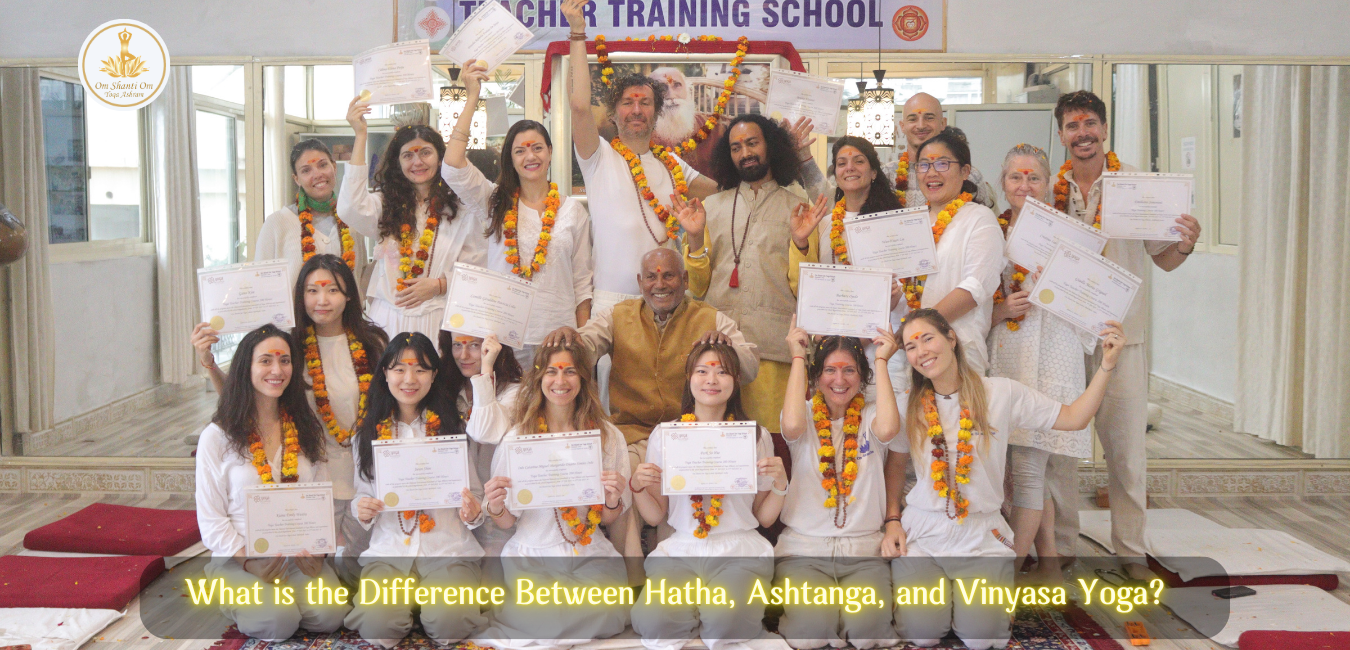
Week 4 — Integration and Certification: The final week brings everything together. You complete your practical teaching examination, participate in the closing ceremony, and receive your internationally recognised certificate. By this point, most students say the four weeks felt both incredibly fast and profoundly transformative.
Why Do It in India — and Why Rishikesh Specifically?
You could technically do a yoga teacher training in your home country. So why do so many people travel all the way to India?
The answer goes beyond cost, though the savings are significant — a Yoga Alliance-certified 200-hour TTC at Om Shanti Om Yoga Ashram starts from as low as $600 USD (food, accommodation, and certification included), compared to programs in the US or Europe that often run $2,000 or more.
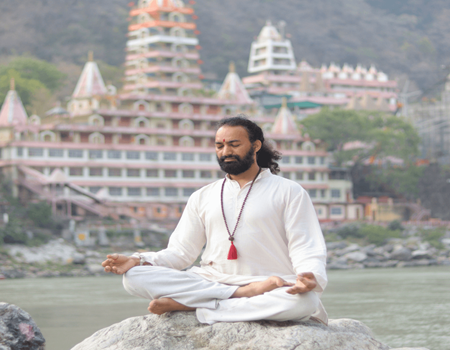
The deeper reason is that India is the birthplace of yoga. The knowledge here is not imported or adapted — it is rooted in thousands of years of unbroken tradition. When you practice pranayama on the banks of the Ganga River with the Himalayan foothills in front of you, the experience carries a quality that simply cannot be replicated in a city studio.

Rishikesh in particular holds a rare energy. Known globally as the Yoga Capital of the World, it has been a centre of spiritual practice for centuries. The Beatles visited in 1968. Swami Sivananda built his Divine Life Society here. Seekers from every corner of the planet have been drawn to this town on the Ganges for generations. Om Shanti Om Yoga Ashram was established here in 1999 and has since trained over 25,000 students from more than 100 countries. There is something powerful about practising alongside people from all over the world, all drawn to the same place by the same pull.
Final Thoughts: The Journey is Worth It
Becoming a certified yoga teacher does not require years of preparation or a lifetime of prior practice. In as little as 24 days, you can go from student to certified teacher — with an internationally recognised qualification and the confidence to step in front of a class.
The key is choosing the right path for where you are right now. If you are just beginning, the 200-hour TTC is your starting point. If you are already an RYT 200 looking to grow, the 300-hour course will take you deeper. And if you are ready to make yoga your full vocation, the 500-hour path will give you everything you need.
Whatever level you are at, Rishikesh has a way of meeting you exactly where you are — and taking you further than you thought you could go.
Ready to Begin Your Journey?










0 Comments
No comments yet. Be the first to comment!