

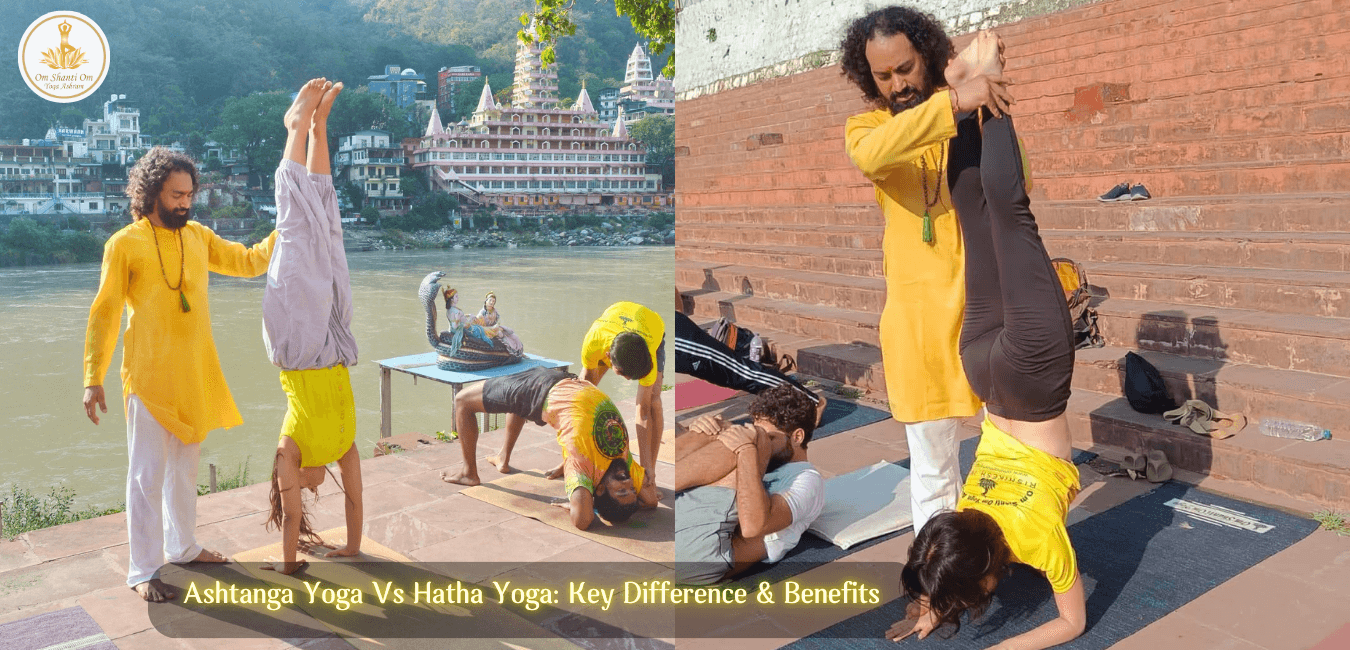
Yoga has been practised for centuries, used to enhance physical well-being, mental sharpness, and spiritual health. Of the numerous yoga forms, Hatha and Ashtanga yoga are two of the most popular. They both provide wonderful benefits but differ in method, pace, and intensity. If you don't know which one is ideal for you, this guide will be able to tell you their differences and similarities. Studying about these two types of yoga will not only guide you in making a well-versed decision but also make you appreciate yoga as an art. Each style has its philosophy and approach, making them appropriate for different people depending on their needs and intentions.
What is Hatha Yoga?
Hatha Yoga is a traditional and classical form that focuses on the balance of body and mind using gentle postures (asanas), control of breath (pranayama), and meditation. The word 'Hatha' is Sanskrit, in which 'Ha' represents the sun and 'Tha' represents the moon, representing the coming together of opposites. It is slower in pace and enables one to retain the position longer, emphasising awareness of breath and alignment.
Key Features of Hatha Yoga:
- Slow-paced and gentle, ideal for beginners
- Emphasises deep breathing, relaxation, and awareness
- Includes number of asanas, pranayama (control of breath), shatkarmas (purification practices), mudras, and bandhas
- Assists in increasing flexibility, strength, and inner peace
- Most suitable for stress relief, meditation, and integral healing
Hatha yoga is ideal for those who need a meditative exercise that contributes to stress reduction and body equilibrium. It is commonly utilised as a preparatory phase for more intense meditation exercises, which makes it ideal for those who need inner peace and awareness.

What is Ashtanga Yoga?
Ashtanga Yoga, or Ashtanga Vinyasa, is a dynamic, physically intense practice that adheres to a set order of postures integrated with breath control. Having developed in the Mysore Palace under Sri K. Pattabhi Jois, this practice uses synchronised movement and breath (vinyasa) to generate a smooth sequence.
Key Features of Ashtanga Yoga:
- Brisk, energetic, and adheres to a fixed format
- Involves a predetermined series of postures divided into primary, intermediate, and advanced series
- Utilises Ujjayi breathing and Drishti (gaze) for greater focus
- Develops strength, endurance, flexibility, and concentration
- Typically taught in two methods: Mysore-style (self-guided) and Led class (guided session)
- Needs commitment and discipline because of its intensity
Ashtanga yoga would suit those who love a physically challenging practice and would like to gain strength, flexibility, and mental control. It is more beneficial for individuals who like having a disciplined routine with a clear order of action.

Read Also: 200 Hours Yoga Teacher Training in India
Difference Between Hatha Yoga and Ashtanga Yoga
- Hatha Yoga is a slow and gradual practice, enabling individuals to maintain poses for prolonged durations while attuning themselves to breath awareness and relaxation. It is intended to generate balance in the body and mind by integrating diverse yogic techniques, such as purification practices, mudras, and meditative exercises.
- Conversely, Ashtanga Yoga is a more vigorous and physically demanding practice. It has a fixed sequence of postures, flowing dynamically from one posture to the next in synchrony with Ujjayi breathing. In contrast to Hatha Yoga, where the sequence is not rigid, Ashtanga has a strict format that demands discipline and dedication.
- Whereas Hatha Yoga is ideal for beginners and those who want a gentle, meditative practice, Ashtanga Yoga is best for intermediate to advanced students who want endurance, strength, and a systematic approach to their practice.
- Another difference is the breathing style. Hatha Yoga is characterized by slow breathing and deep movements that promote relaxation and internal stability, while Ashtanga Yoga includes the use of Ujjayi breath, which creates inner heat and promotes movement flow.
- In terms of goals, Hatha Yoga aims to bring balance, relaxation, and mindfulness to practitioners, making it ideal for stress relief and overall well-being. Ashtanga Yoga, in contrast, is designed to build stamina, improve physical endurance, and cultivate discipline through a rigorous practice.
Read Also: 300 Hours Yoga Teacher Training in India
Similarities Between Ashtanga and Hatha Yoga
Despite their differences, both Hatha and Ashtanga yoga share several key similarities:
- Asanas: Both types include traditional yoga poses such as Downward Dog, Triangle Pose, and Warrior Pose.
- Breath Awareness: Breathing in both practices is important to develop concentration and stability.
- Mind-Body Connection: Both practices seek to establish balance between the body and the mind.
- Modifications Available: Modifications and adjustments can be applied in both types to accommodate various levels of practitioners.
- Philosophical Origins: Both styles have their roots in ancient yogic practices and focus on discipline, awareness, and self-knowledge.
Which One to Choose?
It all depends on your own objectives and level of fitness:
- If you are a beginner or like a gentle, meditative style, Hatha Yoga is the way to go.
- If you like a physically challenging and formal routine, Ashtanga Yoga is perfect.
- If you prefer a combination of both, you can practice Hatha yoga to loosen up and balance, and introduce Ashtanga yoga to build up strength and endurance over time.
- If your intention is weight loss, Ashtanga yoga could be more ideal since it has a very good cardio aspect.
- If you are prone to stress and anxiety, Hatha yoga's slow-paced movement and breathing could be more helpful.
Finding the Right Class
If you want to find Ashtanga yoga classes in your area or seek genuine training, try learning from experienced teachers in Rishikesh. If you are interested in Mysore-style practice, verifying Ashtanga Yoga Mysore fees at well-known yoga centres can assist you in planning your training. If you opt for Hatha or Ashtanga, a committed Ashtanga yoga centre or Hatha yoga retreat can guide you properly.

Read Also: 500 Hours Yoga Teacher Training in India
Final Thoughts
Both Hatha and Ashtanga yoga have wonderful benefits, and it's up to you what you should choose based on your individual goals. Although Hatha yoga sets the grounds with its slow and patient way, Ashtanga yoga pushes you with its energetic sequences. Regardless of the style you go for, daily practice can result in a healthier body and a sharper mind.
If you are a new practitioner or have been practising yoga for years, studying with real teachers in Hatha Yoga Rishikesh can deepen your practice. Practice both styles and discover the best one for you!
Yoga is a lifelong process, and both styles can be used in combination very nicely. You may begin with Hatha Yoga to create awareness and stability, and later shift to Ashtanga Yoga for physical practice and advancement. Regardless of what you decide, persistence and commitment will lead to the greatest advantages of yoga in your life.







0 Comments
No comments yet. Be the first to comment!