


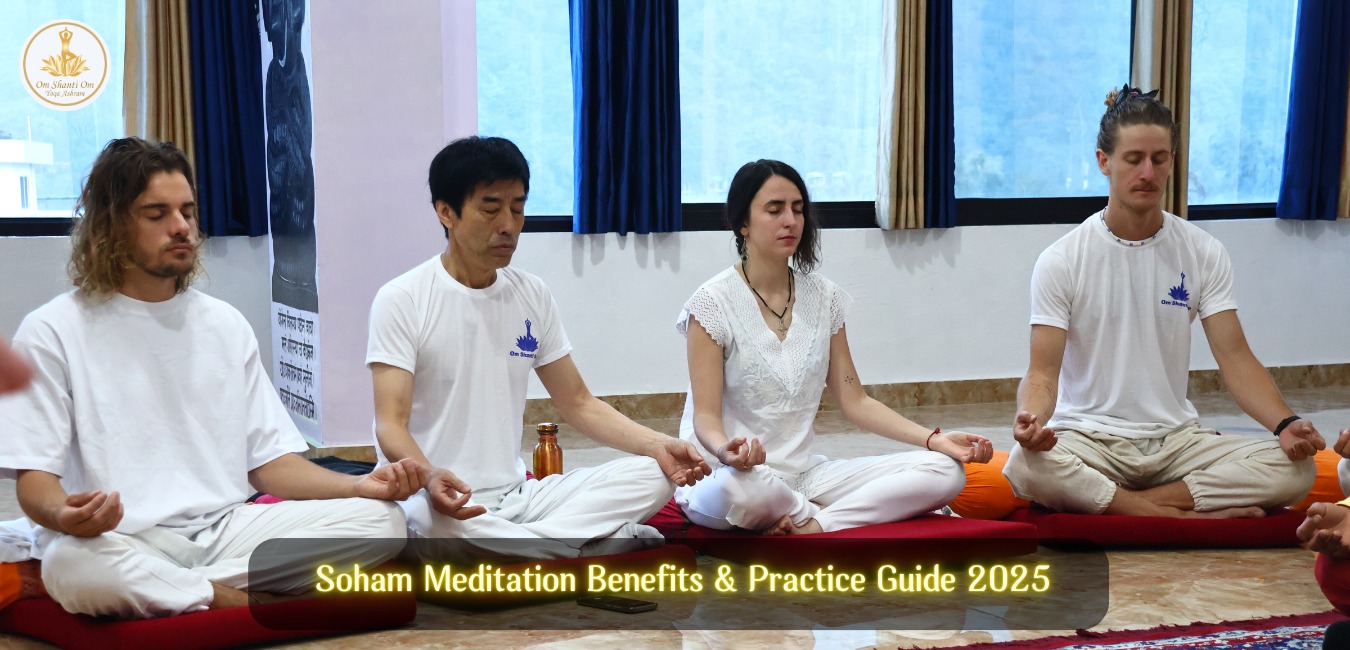
If you have spent any time around a yoga ashram in the early morning, you've probably heard it before you even knew what it was — a low, steady chant rising from a group of seated practitioners, the same syllables repeated with quiet devotion. More likely than not, that was the Gayatri Mantra. It is, without much debate, the most revered mantra in the entire Vedic tradition, recited daily by millions of people worldwide for thousands of years. And yet, despite how widely it's chanted, very few people who recite it actually know what each word means, why it's structured the way it is, or why sound itself plays such a central role in its effect.
This guide is an attempt to fix that. We're going to walk through the mantra word by word, look at what's actually happening acoustically and physiologically when you chant it, and cover exactly how to pronounce and practice it so that you're not just repeating sounds, but genuinely connecting with what they mean.
What Is the Gayatri Mantra?
The Gayatri Mantra comes from the Rig Veda, one of the four foundational scriptures of Hinduism and among the oldest religious texts still in continuous use anywhere in the world. It's composed in a poetic meter called Gayatri Chhandas — twenty-four syllables arranged across three lines of eight syllables each — which is actually where the mantra gets its name. The meter, not a deity, is the namesake. Over time, this meter became so closely associated with this particular verse that "Gayatri" eventually came to refer to the mantra itself, and the verse is also personified as Goddess Gayatri, often considered the mother of the four Vedas.
The mantra is technically addressed to Savitr, a Vedic solar deity associated with the life-giving, illuminating power of the sun. This is an important point, because many people assume the Gayatri Mantra is a prayer to a specific goddess in the way Bhakti traditions pray to Krishna or Devi. It's more accurate to understand it as an invocation of divine light itself — light as wisdom, light as consciousness, light as the force that allows perception, growth, and understanding to occur at all.
In the Sanskrit tradition, the Gayatri Mantra holds a category of importance that few other verses share. It's referred to as a Maha Mantra — a "great mantra" — and is considered so sacred that in classical times it was reserved for recitation only after a person had undergone specific initiation. Today, while many of those restrictions have relaxed, the mantra retains its weight. Reciting it is treated less like saying a prayer and more like tuning yourself, deliberately and repeatedly, to a particular frequency of awareness.
The Full Mantra in Sanskrit
Here is the mantra in its complete form, written in transliteration:
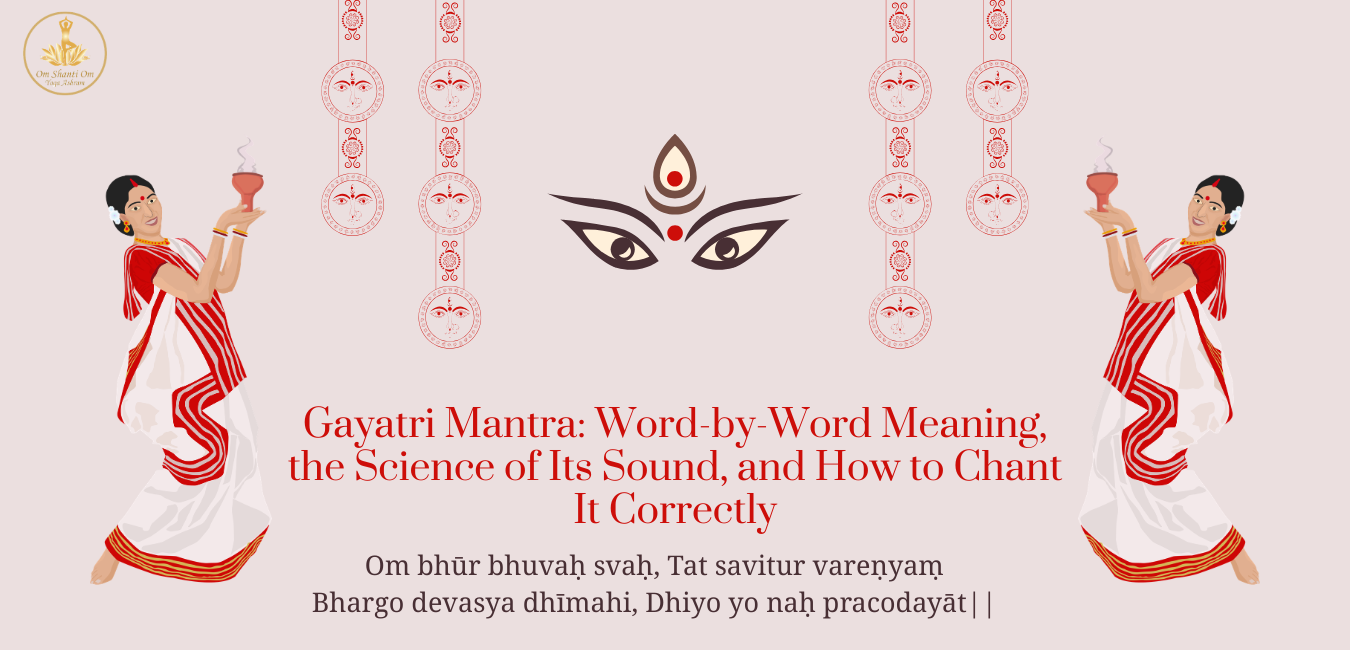
Om Bhur Bhuvah Swaha Tat Savitur Varenyam Bhargo Devasya Dheemahi Dhiyo Yo Nah Prachodayat
Some versions include an additional opening line — Om Bhur Bhuvah Swaha is sometimes treated as a separate invocatory phrase that precedes the core three-line verse, while other traditions chant it as an integrated part of the mantra itself. Both approaches are considered valid, and you'll find slight variations in how different lineages present it. What matters more than which version you use is understanding what you're actually saying.
Word-by-Word Meaning
Breaking the mantra down syllable by syllable reveals just how dense and intentional this verse really is. Nothing here is filler.
Om — The primordial sound, often described as the vibration underlying all of creation. It's not really translatable into a single English word; it functions more as a sonic representation of ultimate reality itself, the sound from which all other sound emerges.
Bhur — Refers to the physical realm, the earth, the plane of material existence. This is the world of the body, the senses, and everyday waking life.
Bhuvah — Refers to the subtler, intermediate realm — sometimes translated as the atmosphere, or the plane of mental and energetic existence that sits between the physical and the purely spiritual.
Swaha — Refers to the heavenly or celestial realm, the plane of pure spirit and divine consciousness.
Together, Bhur Bhuvah Swaha names the three traditional planes of existence in Vedic cosmology — body, mind, and spirit, or earth, atmosphere, and heaven. By invoking all three before the central request of the mantra, the practitioner is essentially saying: I bring my whole being — physical, mental, and spiritual — into this moment of prayer.
Tat — Means "that." It's a way of pointing toward the divine without naming or limiting it to a specific form — "that" ultimate reality, that which is beyond definition.
Savitur — Refers to Savitr, the solar deity representing the life-giving, illuminating quality of the sun. Importantly, this isn't a prayer to the physical sun as an object, but to the principle the sun represents: the source of light, energy, and life itself.
Varenyam — Means "worthy of worship" or "most excellent." It's an expression of reverence, acknowledging the supreme worthiness of that divine light.
Bhargo — Refers to radiance, splendor, or effulgence — the brilliant quality of light that doesn't just illuminate but actively transforms what it touches.
Devasya — Means "of the divine" or "of God," reinforcing that the radiance being spoken of is not ordinary light but a divine, conscious force.
Dheemahi — Means "we meditate upon" or "we contemplate." This is the verb that turns the entire first half of the mantra into an active practice rather than a passive description. It's a declaration of intention: we are now turning our attention toward this divine radiance.
Dhiyo — Refers to intellect, understanding, or the faculty of discernment — essentially, the mind's capacity to perceive truth clearly.
Yo — A relative pronoun, meaning "who" or "which," connecting the request back to the divine light being invoked.
Nah — Means "our," indicating the request is being made on behalf of the practitioner and, often, the wider community.
Prachodayat — Means "may it inspire," "may it illuminate," or "may it awaken." This final word carries the entire purpose of the mantra: a heartfelt request for the divine light to awaken and sharpen our intellect.
Put together in plain English, a commonly accepted translation reads something close to: "Om. Earth, atmosphere, heaven. Let us meditate on the most excellent radiance of that divine sun, who may illuminate our intellect."
What's striking once you see it laid out this way is that the Gayatri Mantra isn't asking for wealth, protection, or even happiness in the conventional sense. It's asking for one specific thing: clarity of mind. It's a prayer for the awakening of discernment, perception, and wisdom — which, in the yogic worldview, is considered the root from which every other genuine good naturally follows.
The Science of Its Sound
It's tempting to treat mantra chanting purely as a matter of faith, but there's a growing body of understanding — both ancient and modern — about why the sound itself matters, independent of belief.
In the Vedic understanding, sound is not just a vehicle for meaning; it's considered a form of vibration that interacts directly with the subtle body. Each Sanskrit syllable in the Gayatri Mantra is believed to correspond to a specific energetic effect, activating particular nerve plexuses, glands, and centers of awareness as it's pronounced. This is part of why precise pronunciation has always mattered so much in this tradition — it isn't pedantry; it's the belief that getting the sound wrong changes its energetic effect, much like playing the wrong note changes a piece of music.
From a more measurable angle, modern research into chanting and mantra practice has observed some consistent physiological patterns. Rhythmic, repetitive vocalization — especially one practiced with a steady breath pattern, as Sanskrit chanting traditionally is — tends to slow the breath rate and extend exhalation. This activates the parasympathetic nervous system, the body's natural relaxation response, which in turn can lower heart rate and reduce circulating stress hormones. Several studies on Om chanting and other Sanskrit mantras have recorded changes in brainwave activity consistent with deepened states of calm and focus, similar to patterns observed during meditation.
There's also something to be said about the specific acoustic structure of Sanskrit itself. Linguists have long noted that Sanskrit is an unusually phonetically precise language, with vowel and consonant sounds organized according to where and how they're produced in the mouth and throat. The Gayatri Mantra's twenty-four syllables move through a deliberate sequence of these sounds, creating a kind of structured vibration through the vocal tract, chest, and skull as it's chanted aloud. Whether or not you subscribe to the more esoteric claims about chakras and energy centers, the simple physical experience of vibration moving through the body during chanting is real and palpable — most people who chant regularly report feeling it directly.
None of this is to reduce the mantra to mere biology. The Vedic tradition has always held that sound, meaning, and intention work together — the vibration without the understanding is incomplete, and the understanding without the sound is equally incomplete. The two are designed to work as one.
How to Chant the Gayatri Mantra Correctly
Correct chanting comes down to three things: pronunciation, rhythm, and intention. None of them require perfection, but all three deserve genuine attention.
Pronunciation. Sanskrit pronunciation can feel unfamiliar at first, especially around aspirated consonants like "bh," "dh," and "gh," which require a soft puff of breath after the initial sound. Take your time with words like Bhargo and Dheemahi — the "bh" and "dh" sounds should feel slightly breathy, not hard like an English "b" or "d." Listening to a few recordings by experienced chanters before attempting it yourself will do more for your pronunciation than reading transliteration alone, since Sanskrit sounds don't map perfectly onto the Roman alphabet.
Rhythm and breath. The Gayatri Mantra is traditionally chanted slowly, with each line given its own steady breath rather than rushed through. A common approach is to inhale fully before beginning a line, and let the exhale carry you through the entire line at an even pace, finishing the last syllable as your breath naturally completes. This isn't about holding your breath under strain — it's about letting the chant and the breath move together, which is part of why it has such a calming effect on the nervous system.
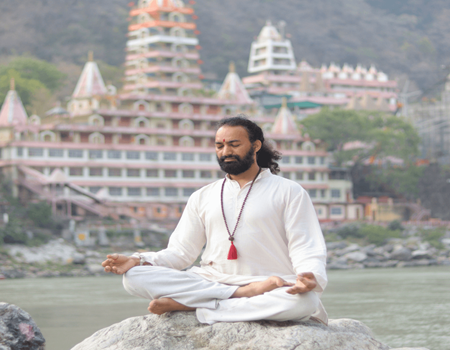
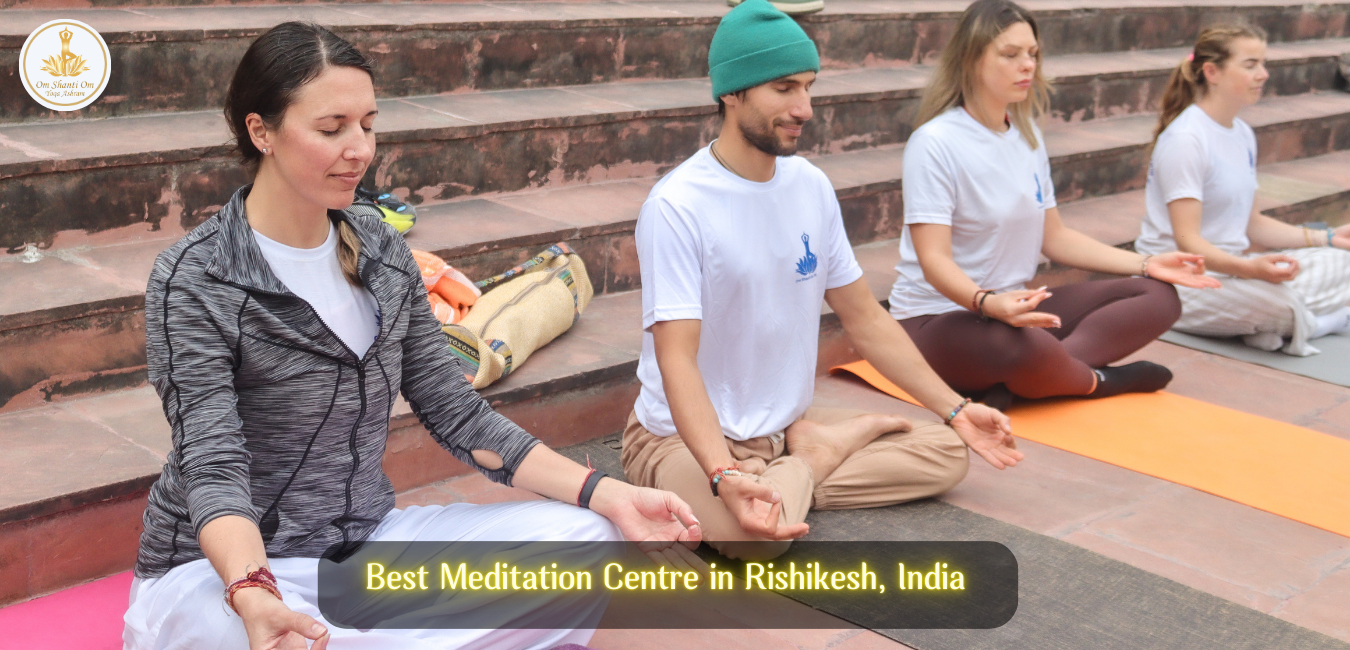
Posture and setting. Traditionally, the mantra is chanted while seated in a comfortable, upright meditative posture — Sukhasana, Padmasana, or simply sitting cross-legged with a straight spine. Facing east, particularly at sunrise, is considered especially auspicious given the mantra's connection to Savitr and solar energy, though this is a traditional preference rather than a strict requirement.
Repetition count. The mantra is most commonly chanted in cycles of 3, 9, or 108 repetitions, with 108 being considered the most complete and traditional count, often tracked using a mala (a string of 108 beads). Beginners often start with just 3 to 9 repetitions and build up gradually as the chant becomes more familiar and comfortable to sustain.
Timing. The three traditional windows for chanting are sunrise, midday, and sunset — referred to as the three Sandhyas, or junctions of the day. Sunrise is generally considered the most powerful and widely practiced time, both for its symbolic alignment with the mantra's solar theme and for the natural stillness of the early morning hours, which makes sustained focus easier.
Intention. Perhaps the most overlooked part of correct chanting is simply remembering what you're actually saying. It's easy to let the mantra become mechanical once it's memorized — repeating syllables while the mind wanders elsewhere. Taking even a few seconds before you begin to genuinely call to mind the meaning — earth, atmosphere, heaven, the radiance of divine light, the sincere request for awakened understanding — transforms the practice from rote repetition into something considerably more alive.
A Practice Worth Returning To
What makes the Gayatri Mantra so enduring isn't mystery or secrecy — it's the opposite. It is a remarkably direct, honest prayer: an acknowledgment of our place across the physical, mental, and spiritual planes of existence, paired with a humble request for clearer perception and a sharper, more awakened mind. There's no promise of wealth, no plea for protection from misfortune, just a steady appeal for the one thing that genuinely changes how we move through everything else in life — the quality of our own understanding.
Whether you come to this mantra through a religious tradition, a yoga teacher training, or simple curiosity about why so many people chant it every single morning, the invitation is the same. Learn the words, understand what they mean, let the sound move through you with attention rather than habit, and give it time. Like most things of real depth, the Gayatri Mantra rarely reveals its full effect on the first few recitations — it's a practice that unfolds slowly, the same way dawn itself does.









0 Comments
No comments yet. Be the first to comment!