


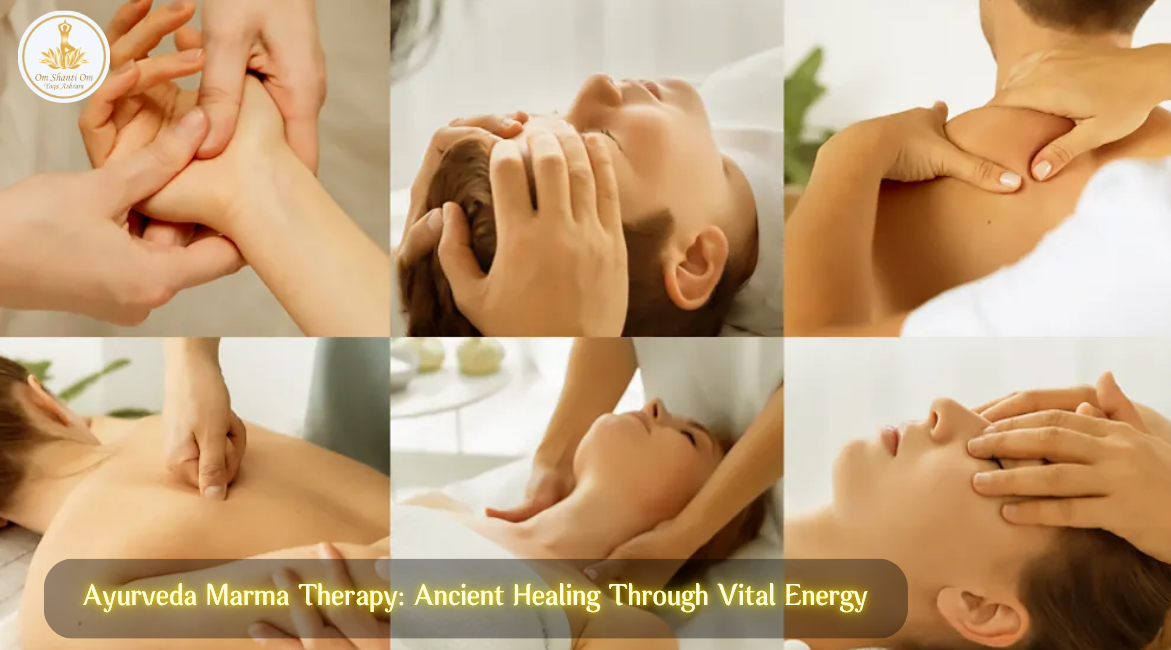
AYURVEDA MARMA is the vital areas of the body. The word Marma comes from Sanskrit's origin word ‘MRI’ meaning death. The Sanskrit phrase, ‘Marayate It Marmani’, also means death or serious damage to body or health after infliction to the point of their situation. Hence these areas are called Marma. In the ‘Siddha’ system of medicine, they are called ‘Varma’. Marma in Sanskrit means hidden or secret. By definition, a Marma point is a junction on the body where two or more types of tissue meet, such as muscles, veins, ligaments, bones, or joints. During ancient times, knowledge of Marma was known to kings and warriors. It was applied in battlefields to hit and achieve the maximum lethal effect on enemies. This science was used both in warfare and surgery. From common ailments to serious neuromuscular diseases, all can be treated by Marma therapy. Common ailments like headache, body ache, faulty spinal alignment, pain in the joints can be rejuvenated through Marma Chikitsa, which involves Swedana, Abhyanga, Pizhichil, and Kizhi (bolus) treatment. Kizhi treatment is a therapy wherein herbs are slightly fried, wrapped in the muslin cloth and tied to make a bolus, heated in medicinal oils in a frying pan, and placed on the area to be treated.

This is followed by a specific massage using fingers, heel, or palm. The pressure application varies according to the nature of ailment and the point of application. Sushruta Samhita describes 107 Marma points in the body. In Tamil traditions, 108 Marma points are enumerated and in Kalari tradition of Kerala 365 Marma points are in practice. Major marma points correspond to seven Chakras, or energy centers of the body, while minor points radiate out along the trunk and limbs. The points cover both the front and back of the body, including 22 on the lower extremities, 22 on the arms, 12 on the chest and stomach, 14 on the back, and 37 on the head and neck. (The mind is considered the 108th Marma.) Each has its own name based on their anatomical position. The human body needs Shodhana (revitalization) in order to perform its function normally and efficiently. In the Ayurvedic system, especially in Kerala, Marma massage is performed as a routine in preventive medicine. A professional therapist isolates Marma points and tones them by increasing blood flow to the affected part of the neuromuscular junction. They also aim to tone the surrounding muscles.
Sushruta Samhita describes 107 Marma points in the body. In Tamil traditions, 108 Marma points are enumerated and in Kalari tradition of Kerala 365 Marma points are in practice. Major marma points correspond to seven Chakras, or energy centers of the body, while minor points radiate out along the trunk and limbs. The points cover both the front and back of the body, including 22 on the lower extremities, 22 on the arms, 12 on the chest and stomach, 14 on the back, and 37 on the head and neck. (The mind is considered the 108th Marma.) Each has its own name based on their anatomical position. The human body needs Shodhana (revitalization) in order to perform its function normally and efficiently. In the Ayurvedic system, especially in Kerala, Marma massage is performed as a routine in preventive medicine. A professional therapist isolates Marma points and tones them by increasing blood flow to the affected part of the neuromuscular junction. They also aim to tone the surrounding muscles.

HISTORY OF MARMA MASSAGE
Ayurveda Marma-point massage dates back to southern India year 1500 BC. Masters of Kalari, an ancient martial art, first discovered the power of Marma points. In battle, Kalari fighters targeted an opponent's Marma point as a way to inflict pain and injury. According to Kalari lore, people have 12 Marma points that, when hit with a knockout blow, can cause instant death. These areas were so important that soldiers even use armor to protect their horses' Marma points while riding into battle. Wounded Kalari fighters were nursed back to health with Marma therapy. Practitioners used Marma-point massage to stimulate healing in areas that corresponded to the injuries. For a blow to intestines, for example, the Marma point on the back of the calf, which corresponds with the transverse part of the large intestine, is massaged to trigger the flow of energy to induce healing. Ayurvedic physicians, all over India learned the importance of this art and hired Kalari masters in hospitals to teach. Soon, Marma-point training became mandatory for surgeons, who worked around specific points to prevent risk to life. Today marma-point massage is still a respected component of Ayurvedic healing.
Role of Marma Therapy
There are four basic purposes of Therapy:
It removes blocks in energy channels called shortages. It pacifies Vata dosha, (air and space elements ), bringing it to its normal path— especially Vyana Vata, (a sub-dosha which controls the autonomic nervous system.) It creates physical, mental, and emotional flexibility. Because of ama (toxins) and because of Vata, human beings after 35 or 40 years of age become rigid — and this happens to animals and plants as well. As Vata increases in the body, it leads to degeneration. This rigidity means becoming fixed in ideas, emotions, and physical movements. This gentle treatment creates an opportunity to experience a powerful and dynamic transformation at the physical, mental, emotional, and spiritual levels by building a positive link with the unconscious mind. Many a time, people are not able to go outside their ‘comfort zone’. They think they have absolute limitations. After Marma is done, they can start taking positive risks.
THERAPEUTIC VALUE OF MARMA
Muscular and joint pain froze jointsMuscular train respiratory conditions digestions and elimination problems Nervous system disorders headaches and migrainesGeneral aging problem glandular issues anxiety and depression stress response, fears, and phobiasConfusion, memory loss, and mental focusLow energy and fatigueBreaking through limited belief systems.
DISEASES CURABLE & MANAGEABLE BY MARMA CHIKITSA
To name a few diseases in which Marma Chikitsa is highly appreciated in giving cure are : Paralysis Sciatic, pain MigraineTremors Diabetic, Neuropa thy Muscular twitching & crampsTrigeminal NeuralgiaFacial or Bell's palsy Urinary incontinence Lumbar Spondylitis Lumbar Spondylolisthesis (Disc bulge or prolapse) Cervical Spondylitis Cervical Spondylolisthesis (Disc bulge or prolapse)Frozen shoulder (Periarthritis)Carpal tunnel syndrome muscular and joint pain Frozen joints Muscular strain Respiratory conditions Digestion and elimination problems Marma Chikitsa is an important aspect of Ayurvedic treatment where the application of pressure on these Marma points induces the flow of vital energy (prana) along with a complex system of subtle channels called (Nadis). Based on the knowledge enumerated in Dhanurveda ( dealing with knowledge of bow and arrow fights), 107 therapeutic Marma points are recognized by Ayurveda. The injury to some of these lethal Marma points can lead to instant death. Massage is widely applied in the treatment of Marmas.
MARMA MASSAGE TODAY
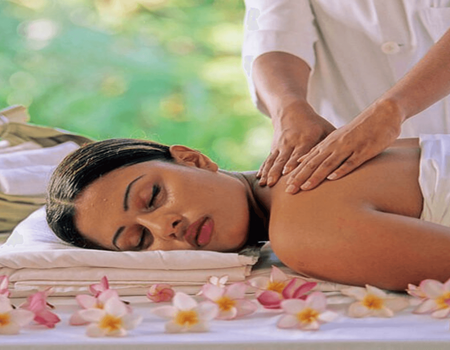
In summary, stimulating or massaging Marma points gives benefits to the area of the location and improves the function of the connecting organs. The Marma massage is approximate of 60 to 90 minutes of duration, followed by a steam bath or warm shower. Given above is only a brief outline of Marma massage. Ideally, Marma massage should be performed by experienced therapists, in consultation with a qualified ayurvedic physician. The Marma massage can be used as a part of a rejuvenation therapy or it could be used as a preventive measure from unwanted conditions. Either way, Marma massage is really useful to help improve or maintain a healthy balance. Thus healing through Marma abhyanga affects the chakras, Physical health, and doshas. The purpose of Marma Abhayangam is to stimulate the various body organs and systems. Marma therapy focuses on energizing the body to relieve occupational illness and stress-related diseases. Often, it helps the couples to re-establish harmony in marital life. Here, Kalari master is the spiritual Guru, Counsellor, and physiotherapist all rolled into one. Marma Chikitsa (therapeutic treatment) is an offshoot of Kalaripayattu; Kerala's martial art.
Start Your Journey to Become a Certified Yoga Teacher
If you are looking for a professional Yoga Teacher Training Program or want to become a Yoga Alliance Certified Yoga Teacher, you are warmly welcome to join Om Shanti Om Yoga Ashram in Rishikesh, India.
Om Shanti Om Yoga Ashram is one of the traditional yoga schools in Rishikesh, founded by Swami Yogananda Maharaj Ji. Our programs combine authentic yogic wisdom with modern teaching methods, helping students develop deep knowledge of Hatha Yoga, Ashtanga Yoga, Pranayama, Meditation, Yoga Philosophy, Anatomy, and Teaching Methodology.
Located in the peaceful spiritual environment of Rishikesh – the Yoga Capital of the World, our courses are designed for beginners, yoga practitioners, and aspiring yoga teachers from around the globe.
Our Popular Yoga Courses
- 100 Hour Yoga Teacher Training in Rishikesh – Perfect for beginners starting their yoga journey.
- 200 Hour Yoga Teacher Training in Rishikesh – The most popular Yoga Alliance certified course to become a professional yoga teacher.
- 300 Hour Yoga Teacher Training in Rishikesh – Advanced yoga training to deepen your knowledge and teaching skills.
- 500 Hour Yoga Teacher Training in Rishikesh – A complete intensive program for mastering yoga practice and teaching.
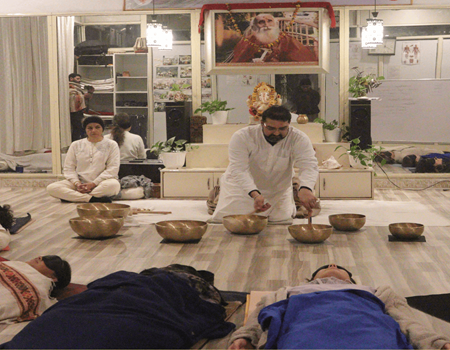
- Sound Healing Course in Rishikesh – Learn the healing power of sound therapy and meditation.
- Meditation and Pranayama Courses – Improve mental clarity, relaxation, and breathing awareness.
Our experienced teachers guide students through a transformative journey of physical practice, spiritual growth, and self-discovery.
If you dream of becoming a certified yoga teacher or simply want to deepen your yoga practice, Om Shanti Om Yoga Ashram offers the perfect place to begin your journey.







0 Comments
No comments yet. Be the first to comment!