


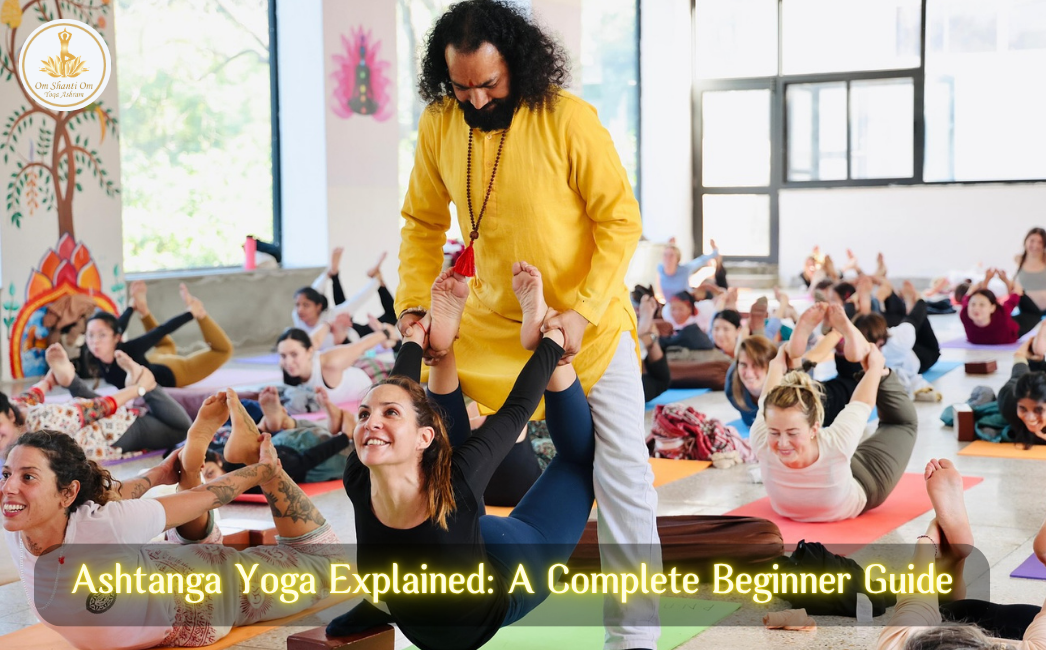
Yoga has evolved into many different styles, but some systems remain deeply rooted in tradition. One such powerful and structured form is Ashtanga Yoga.
Known for its discipline, dynamic flow, and transformative results, Ashtanga Yoga is more than just a physical workout—it is a complete path toward self-awareness and inner growth.
If you’re new to yoga or curious about this practice, this guide will help you understand everything about Ashtanga Yoga—its meaning, history, benefits, and how to start as a beginner.
What Is Ashtanga Yoga?
Ashtanga Yoga is a traditional style of yoga that combines breath, movement, and a fixed sequence of postures to create a flowing, meditative practice.
Unlike other yoga styles where classes vary, Ashtanga follows a structured system, meaning you practice the same sequence of poses in the same order every time.
This repetition helps build:
- Strength
- Flexibility
- Discipline
- Mental focus
At places like Om Shanti Om Yoga Ashram, Ashtanga Yoga is often taught alongside Hatha and Vinyasa styles to provide a complete and balanced yoga education.

Meaning of Ashtanga: The Eight Limbs of Yoga
The word Ashtanga comes from Sanskrit:
- “Ashta” = Eight
- “Anga” = Limbs
These refer to the Eight Limbs of Yoga, a philosophy described by the ancient sage Patanjali.
The Eight Limbs Explained
- Yama – Ethical guidelines (truth, non-violence)
- Niyama – Personal discipline (cleanliness, contentment)
- Asana – Physical postures
- Pranayama – Breath control
- Pratyahara – Withdrawal of senses
- Dharana – Concentration
- Dhyana – Meditation
- Samadhi – State of enlightenment
Ashtanga Yoga integrates all these aspects, making it a complete spiritual system, not just physical exercise.
History and Origin of Ashtanga Yoga
Ashtanga Yoga has its roots in ancient Indian philosophy but was popularized in modern times by Sri K. Pattabhi Jois.
He developed the structured Ashtanga system in Mysore, India, based on traditional teachings. This system later spread worldwide and became one of the most respected yoga practices.
Today, it is widely taught in yoga schools, including traditional ashrams in Rishikesh, where yoga is practiced in its most authentic form.
Key Principles of Ashtanga Yoga
What makes Ashtanga Yoga unique is its strong focus on internal awareness. There are four key principles:
1. Breath (Ujjayi Pranayama)
A deep, controlled breathing technique that creates heat and focus.
2. Drishti (Gaze)
Each pose has a specific gaze point to improve concentration.
3. Vinyasa (Flow)
Movement is synchronized with breath, creating a continuous flow.
4. Bandhas (Energy Locks)
Subtle muscular contractions that help control energy within the body.
Together, these elements turn the practice into a moving meditation.
Structure of Ashtanga Yoga Practice
Ashtanga Yoga is divided into three main series, each with increasing difficulty:
1. Primary Series (Yoga Chikitsa)
- Focus: Detoxification and alignment
- Ideal for beginners
2. Intermediate Series (Nadi Shodhana)
- Focus: Nervous system purification
3. Advanced Series (Sthira Bhaga)
- Focus: Strength, flexibility, and grace
Most beginners start with the Primary Series, gradually progressing over time.
Benefits of Ashtanga Yoga
Ashtanga Yoga is known for its powerful benefits across all levels—physical, mental, and spiritual.
Physical Benefits
Regular practice helps:
- Build strength and endurance
- Improve flexibility
- Detoxify the body through sweat
- Enhance posture and balance
Because it is physically demanding, Ashtanga is often considered a full-body workout.
Mental Benefits
Ashtanga Yoga also trains the mind:
- Improves focus and concentration
- Develops discipline and consistency
- Reduces stress and anxiety
The repetition of sequences creates a meditative rhythm, helping calm the mind.
Spiritual Benefits
Beyond the body and mind, Ashtanga Yoga supports inner growth:
- Increases self-awareness
- Builds inner strength
- Connects you with deeper aspects of yourself
This is why many students describe it as a life-changing practice.

What to Expect in an Ashtanga Yoga Class
If you’re planning to try your first class, here’s what you can expect:
Fixed Sequence
You will follow a set series of poses in the same order.
Fast-Paced Flow
Movements are continuous and linked with breath.
Heat and Sweat
The practice generates internal heat, leading to detoxification.
Minimal Talking
Unlike some yoga styles, teachers may give fewer verbal instructions.
At traditional ashrams, classes are structured and disciplined, often combined with philosophy, meditation, and breathwork for a deeper experience.
Ashtanga Yoga vs Other Styles
Let’s understand how Ashtanga differs from other popular yoga styles:
Ashtanga vs Hatha Yoga
- Hatha: Slow, gentle, beginner-friendly
- Ashtanga: Dynamic, structured, physically intense
Ashtanga vs Vinyasa Yoga
- Vinyasa: Creative, varied sequences
- Ashtanga: Fixed sequence, repetitive
Ashtanga is ideal for those who prefer structure and discipline.
Who Should Practice Ashtanga Yoga?
Ashtanga Yoga is suitable for:
Beginners (with guidance)
You can start slowly with modifications.
Fitness Enthusiasts
Great for building strength and stamina.
People Seeking Discipline
The structured approach helps develop consistency.
Aspiring Yoga Teachers
Many teacher training programs include Ashtanga as a core practice.
Beginner Tips for Ashtanga Yoga
Starting Ashtanga Yoga can feel challenging, but these tips will help:
- Begin with shorter sessions
- Focus on breath, not perfection
- Practice regularly (consistency is key)
- Don’t rush into advanced poses
- Learn from experienced teachers
Remember, progress in yoga is gradual.
Common Mistakes to Avoid
Many beginners make these mistakes:
- Ignoring breath while focusing only on poses
- Pushing too hard and risking injury
- Comparing yourself with others
- Skipping warm-up or relaxation
Yoga is a personal journey—go at your own pace.
Why Learn Ashtanga Yoga in Rishikesh
Rishikesh, known as the Yoga Capital of the World, offers a unique environment for learning yoga.
Here, you experience:
- Authentic teachings
- Traditional ashram lifestyle
- Spiritual atmosphere
- Natural Himalayan surroundings
Practicing Ashtanga Yoga in such a setting enhances both physical and spiritual growth.
Why Choose Om Shanti Om Yoga Ashram
If you want to learn authentic Ashtanga Yoga, Om Shanti Om Yoga Ashram in Rishikesh is an excellent choice.
The ashram offers:
- Yoga Alliance certified courses
- Experienced traditional teachers
- Training in Hatha, Ashtanga, and Vinyasa Yoga
- Holistic learning including philosophy, anatomy, and meditation
The focus is not just on physical practice but on complete personal transformation.
Conclusion
Ashtanga Yoga is a powerful and disciplined practice that goes far beyond physical exercise. It is a complete system for self-development, combining movement, breath, and awareness.
While it may seem challenging at first, consistent practice can bring incredible results:
- Stronger body
- Focused mind
- Balanced emotions
- Deeper self-awareness
Whether you want to improve your fitness, reduce stress, or explore the deeper dimensions of yoga, Ashtanga Yoga offers a path for everyone.
Start Your Yoga Journey
If you feel inspired to explore Ashtanga Yoga more deeply, you can join:
- 100 Hour Yoga Teacher Training
- 200 Hour Yoga Teacher Training
- 300 Hour Yoga Teacher Training
- 500 Hour Yoga Teacher Training
At Om Shanti Om Yoga Ashram in Rishikesh, you will experience yoga in its most authentic and traditional form.









0 Comments
No comments yet. Be the first to comment!