

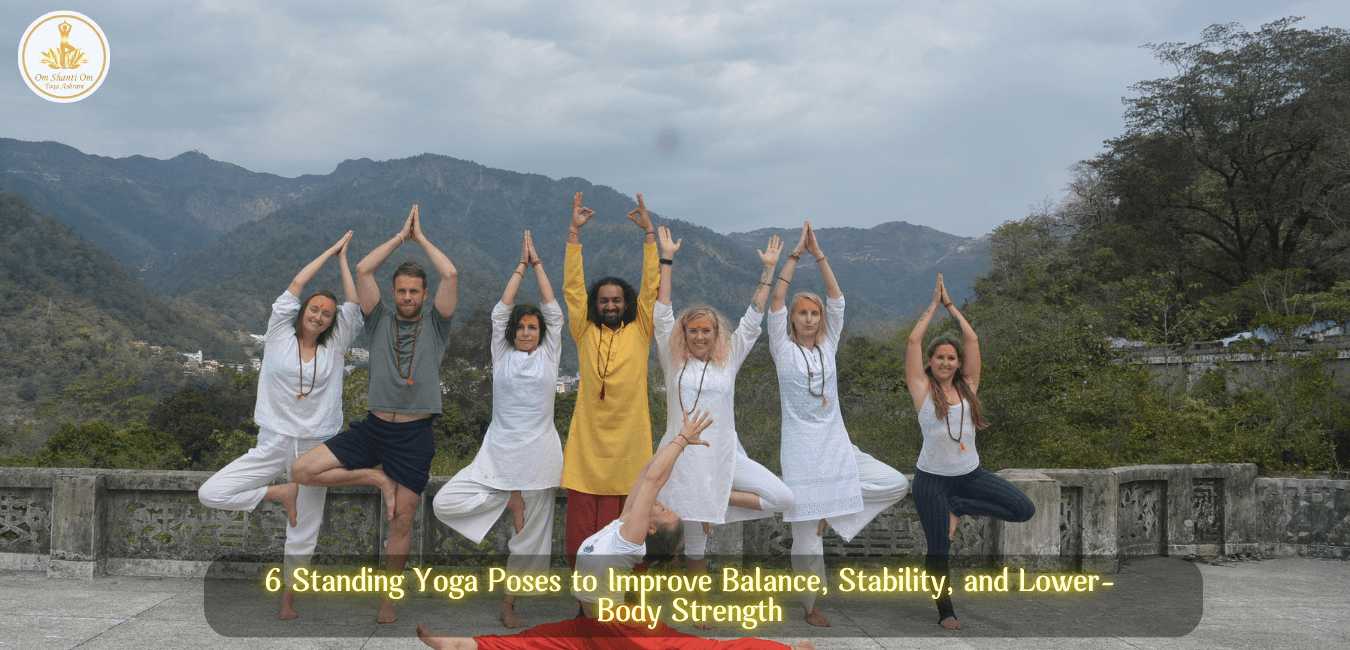
In the journey of self-discovery through yoga, the quest for balance plays a pivotal role. Standing yoga poses, known for their ability to enhance stability, strength, and focus, form an integral part of any well-rounded practice. This blog will explore six standing yoga poses that not only challenge your physical equilibrium but also cultivate mental steadiness. Whether you are a seasoned yogi or a novice, these poses offer a pathway to improving your balance and overall well-being.

1. Tree Pose (Vrikshasana):
Tree Pose, or Vrikshasana, is a classic standing yoga pose that focuses on grounding and balance. To practice this pose, start by standing on one leg and bringing the sole of the opposite foot to the inner thigh or calf, avoiding the knee. Find a focal point to gaze at, engage your core, and bring your hands to the heart center or extend them overhead. Tree Pose not only strengthens the muscles in the standing leg but also promotes concentration and stability, making it an excellent pose for improving overall balance.

2. Warrior III (Virabhadrasana III):
Warrior III, or Virabhadrasana III, is a dynamic standing pose that challenges both strength and balance. Begin by standing in Mountain Pose and shift your weight onto one leg while extending the other leg straight back. Simultaneously, lower your torso and arms forward, creating a straight line from the heel of the extended leg to the crown of your head. Warrior III targets the muscles of the standing leg, the core, and the back, fostering stability and concentration. Regular practice of this pose contributes to improved balance and a stronger sense of body awareness.

3. Extended Triangle Pose (Trikonasana):
Extended Triangle Pose, or Trikonasana, is a standing pose that engages multiple muscle groups while enhancing balance and flexibility. From a wide-legged stance, extend one leg out and reach towards the toes of that foot while keeping the torso in line with the hips. The extended arm can be raised towards the sky, creating a triangular shape with the body. Extended Triangle Pose not only stretches and strengthens the legs, hips, and spine but also requires engagement of the core for stability. Integrating this pose into your practice helps develop both physical and mental equilibrium.

4. Eagle Pose (Garudasana):
Eagle Pose, or Garudasana, is a standing balance pose that combines strength and flexibility. Begin by standing on one leg and wrapping the opposite leg around it, while also crossing the arms at the elbows and wrists. Eagle Pose targets the muscles of the legs, shoulders, and upper back. The intertwining of limbs challenges balance and concentration, requiring a mindful awareness of your body's alignment. Regular practice of Eagle Pose can enhance stability in the legs, improve joint flexibility, and sharpen mental focus.

5. Chair Pose (Utkatasana):
Chair Pose, or Utkatasana, is a standing yoga pose that not only strengthens the lower body but also challenges balance and endurance. To practice this pose, begin in Mountain Pose and lower your hips as if sitting back into an imaginary chair while reaching the arms overhead. Chair Pose engages the muscles of the thighs, hips, and lower back, promoting stability and strength. The sustained hold of the pose builds endurance and concentration, making it an effective way to improve overall balance.

6. Half Moon Pose (Ardha Chandrasana):
Half Moon Pose, or Ardha Chandrasana, is a standing balance pose that integrates strength, flexibility, and stability. Starting from Warrior II, shift your weight onto the front leg while lifting the back leg parallel to the ground. Simultaneously, extend the upper arm and torso towards the front, creating a half-moon shape. Half Moon Pose engages the muscles of the legs, core, and shoulders, challenging your balance and proprioception. Regular practice of this pose enhances overall stability and cultivates a sense of poise and grace.
The practice of standing yoga poses goes beyond the physical realm, offering a holistic approach to balance that encompasses both body and mind. Incorporating Tree Pose, Warrior III, Extended Triangle Pose, Eagle Pose, Chair Pose, and Half Moon Pose into your regular yoga routine can be transformative. These poses not only strengthen and stretch the body but also enhance concentration, focus, and inner stability. As you embark on the journey of mastering these standing poses, you'll discover the profound interconnectedness between physical balance and mental equilibrium, fostering a deeper sense of well-being and self-awareness.
Thinking about becoming a yoga teacher?
Join our 200 Hour Yoga Teacher Training in Rishikesh and experience authentic yogic wisdom, self-transformation, and internationally recognized certification.








0 Comments
No comments yet. Be the first to comment!