


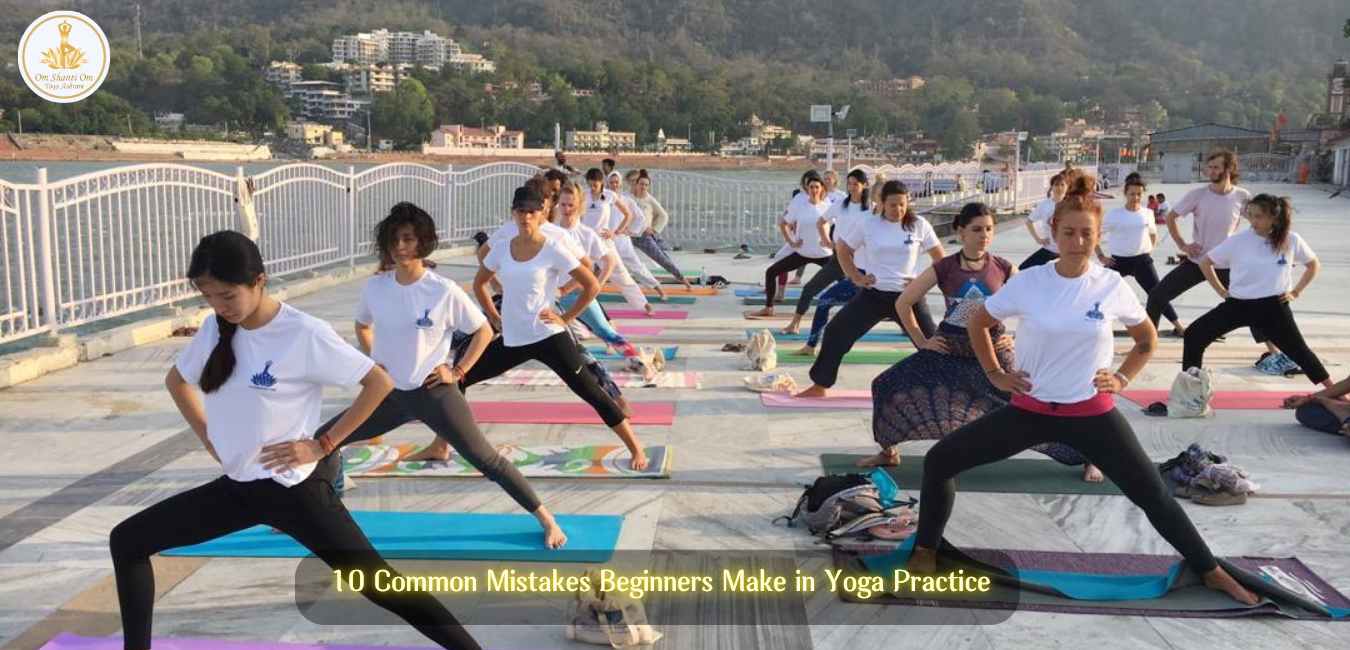
So you have rolled out your mat, slipped on some comfortable clothes, and decided to give yoga a real shot. That is genuinely exciting and a decision your body and mind will thank you for. But here's something nobody tells you when you're just starting: the first few weeks of yoga can feel awkward, humbling, and even a little frustrating.
You try to hold a pose and wobble. You glance over at the person next to you, gracefully folded in half, and wonder if you're even doing the same exercise. You leave class feeling confused about whether you stretched the right muscles or strained the wrong ones.
Here's the truth — that's completely normal. Every experienced yogi you admire has been exactly where you are right now. The difference between those who quit early and those who build a lasting, transformative practice often comes down to awareness. Specifically, awareness of the common mistakes beginners make and how to gently correct them.
This blog walks you through ten of the most frequent pitfalls new yogis fall into — not to make you feel bad about them, but to help you sidestep them so your practice can grow in the right direction from day one.
Mistake 1: Skipping the Warm-Up
This is probably the most common mistake, and it happens because beginners often underestimate yoga. It looks slow and peaceful on Instagram, so how hard could it be, right?
But yoga — even gentle yoga — asks a lot of your joints, muscles, and connective tissues. Walking straight into a deep lunge or a forward fold with cold muscles is a recipe for strain. Your hamstrings, hips, and lower back are especially vulnerable when they haven't been warmed up.
Before you begin any session, spend at least five to ten minutes doing gentle movement. Neck rolls, cat-cow stretches, gentle spinal twists, or even a short walk can prepare your body beautifully. Think of it as telling your muscles, "Hey, we're about to do something. Get ready."
Mistake 2: Comparing Yourself to Others in the Room
Walk into almost any yoga class and you'll find someone who seems to have been born bendy — someone who folds completely flat, holds a handstand effortlessly, or flows through a vinyasa like water. And it's very easy, almost automatic, to look at them and feel like you're failing.
Here's what you need to understand: yoga is not a performance. It's not a competition. What that person next to you can do with their body has absolutely nothing to do with what your body needs today.
Flexibility, strength, and balance in yoga are deeply personal. They depend on your anatomy, your history of movement, your age, any past injuries, and even how well you slept last night. Two people in the same pose can look completely different and both be doing it perfectly — for their own bodies.
The moment you shift your gaze inward — focusing on your own breath, your own sensations, your own edge — is the moment yoga starts working for you. Keep your eyes on your own mat. Literally.
Mistake 3: Holding Your Breath
Ask any yoga teacher what the number one thing beginners do wrong, and most of them will say this: they hold their breath.
When a pose feels hard or unfamiliar, the instinct is to tense up and freeze — including stopping the breath. But breath is the foundation of yoga. It's not a bonus feature; it's the whole point.
Breathing keeps your nervous system calm, helps your muscles relax into stretches, and signals to your body that you're safe. When you hold your breath, your muscles tighten, your stress response kicks in, and the pose becomes harder and less effective.
The fix is simple, though not always easy: keep breathing. If you notice you've stopped, that's your cue to ease off slightly and let the breath return. A good general rule in yoga is that if you can't breathe naturally in a pose, you've gone too deep. Back off a little and find the version of the pose where you can still breathe steadily.
Mistake 4: Forcing Flexibility
We live in a culture that celebrates extremes. More is more. Push harder. No pain, no gain. And while that might work in some fitness contexts, it is genuinely harmful in yoga.
Yoga is not about how far you can stretch. It never has been. Forcing your body into a deep stretch before it's ready doesn't speed up progress — it tears muscles and damages tendons. And injuries from forced flexibility can take months to heal, setting you back far further than patience ever would.
There's an important distinction between discomfort and pain in yoga. A gentle pulling sensation as you stretch into a pose — that's normal. Sharp pain, a burning sensation, or anything that makes you wince is your body telling you to stop.
Flexibility comes slowly, and that's okay. Consistent, mindful stretching over weeks and months will open your body in ways you can't force in a single session. Trust the process.
Mistake 5: Practicing with Poor Alignment
Alignment is one of those words you'll hear yoga teachers repeat constantly — and for very good reason. How you position your body in each pose determines whether you're getting the benefit of that pose or quietly building toward an injury.
Poor alignment is tricky because it often doesn't hurt right away. You might practice with your knee rolling inward in Warrior I for months before you start noticing knee discomfort. The damage is cumulative and slow, which is why beginners often don't connect the pain to the mistake.
Some of the most common alignment errors include letting the front knee collapse inward in lunges, rounding the lower back in forward folds, locking the elbows in Downward Dog, and collapsing the chest in seated poses.
The best way to address alignment early is to take in-person classes with a good teacher who can offer real-time corrections. If you're practicing at home, use a mirror occasionally to check your form, go slowly, and pay attention to how poses actually feel in your body rather than what they look like.
Mistake 6: Refusing to Use Props
There is a surprising amount of ego wrapped up in yoga props. Beginners often feel that using a block or a strap is somehow cheating — that it's an admission that they're not good enough to do the "real" pose.
This is one of the most counterproductive beliefs a new yogi can carry into practice.
Props exist not to make yoga easier for weak people, but to make yoga correct for all people. A block under your hand in Triangle Pose doesn't mean you failed — it means your spine is actually long and your hips are properly aligned instead of compensating. A strap in a seated forward fold means your hamstrings can actually lengthen instead of your lower back rounding dangerously.
Experienced yogis use props. Advanced teachers use props. Props are tools, not training wheels. Embrace them without embarrassment — they will genuinely accelerate your progress and protect you from injury.
Mistake 7: Going Too Hard Too Fast (or Too Infrequently)
Beginners often fall into one of two traps: they go all-in immediately, practicing every day at full intensity until they burn out or get hurt — or they practice so rarely that their body never gets to adapt and build continuity.
Both extremes work against you.
Yoga builds its benefits over time through consistent, moderate practice. Three to four sessions a week, even if they're only 30 minutes each, will serve you far better than one grueling two-hour session on Sunday followed by nothing for the rest of the week.
If you're just starting out, two to three sessions per week is a wonderful place to begin. Give your body rest days in between so your muscles can recover and integrate what they've learned. As yoga becomes more natural and enjoyable, you can gradually increase your frequency.
Consistency is the secret. Not intensity.
Mistake 8: Wearing the Wrong Clothes or Using a Poor-Quality Mat
This might sound trivial, but your gear genuinely matters — especially as a beginner who's still figuring out how your body moves in poses.
Wearing baggy clothes in yoga creates problems. Loose fabric falls over your face in forward folds, gets in the way during inversions, and makes it hard for you (and your teacher) to see your body's alignment. You don't need to wear skin-tight everything, but fitted, stretchy clothing that moves with your body makes a real difference.
Your mat is even more important. A cheap, thin mat will slide around, compress too easily, and leave your joints unsupported. It can also lose grip when you sweat, which is a safety issue. Invest in a decent-quality mat with good grip and adequate thickness — it doesn't need to be expensive, but it should be functional. Your knees and wrists will appreciate it.
Mistake 9: Rushing Out Before Savasana
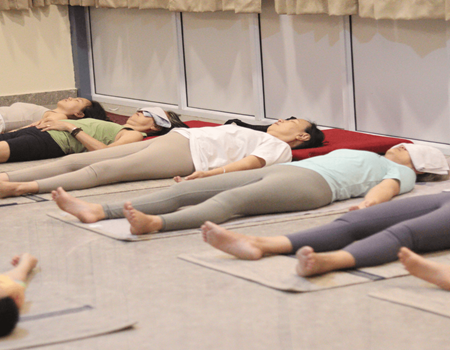
Savasana — the final relaxation pose where you lie still on your back — is often skipped by beginners who feel awkward just lying there, or who need to get somewhere and figure five minutes of stillness isn't worth staying for.
This is one of the most unfortunate mistakes you can make.
Savasana is not the "cool down" or the easy part at the end. It is arguably the most important pose in the entire practice. It's the period where your nervous system processes everything your body just did, where your muscles begin to release held tension, and where the physical work of yoga integrates into your body and mind.
Research in the fields of exercise science and neuroscience consistently points to rest and integration as essential parts of any physical practice. Skipping Savasana is like baking a cake and pulling it out of the oven five minutes too early.
Stay for it. Even if it feels uncomfortable to be still. Especially if it feels uncomfortable to be still — that discomfort is where some of the deepest work happens.
Mistake 10: Trying to Learn Entirely on Your Own
We live in an age of abundant free content. YouTube tutorials, Instagram reels, apps with hundreds of classes — you can technically access yoga instruction without ever paying for a class. And there's real value in that accessibility.
But learning yoga entirely on your own, especially as a complete beginner, carries significant risk. Video instructors can't see you. They can't tell you that your hip is dropping in Warrior III or that your neck is strained in Shoulder Stand. They teach to an invisible average student, not to your specific body with its specific strengths and limitations.
Even attending a few in-person classes early in your practice — just enough to get proper foundational alignment cues from a trained teacher — can prevent months of ingrained bad habits. A good teacher will notice things about your body and your practice that you simply cannot see yourself.
If in-person classes aren't accessible for you, look for live online classes with small groups where a teacher can actually see your screen, or invest in a few one-on-one virtual sessions. The upfront cost is worth it for the foundation it builds.
A Final Word: Mistakes Are Part of the Practice
Here's something wonderful about yoga that makes it unlike almost any other physical discipline: the philosophy of yoga actually embraces imperfection. The concept of ahimsa — non-harm — applies not just to how you treat others, but how you treat yourself. That includes not beating yourself up for wobbling, falling, or making mistakes.
Every single mistake on this list is something that millions of yogis before you have made and moved through. They're not signs that you're doing it wrong — they're signs that you're learning.
What matters is not that you practice perfectly. What matters is that you keep showing up, stay curious about your body, breathe through the hard moments, and give yourself grace when things don't go as planned.
Yoga is a lifelong journey. The mat will always be there for you — and every time you step onto it, even imperfectly, you're doing something genuinely good for yourself.
Now roll out that mat, take a deep breath, and begin.
Start Your Yoga Journey
If you feel inspired to explore Ashtanga Yoga more deeply, you can join:
- 100 Hour Yoga Teacher Training
- 200 Hour Yoga Teacher Training
- 300 Hour Yoga Teacher Training
- 500 Hour Yoga Teacher Training
At Om Shanti Om Yoga Ashram in Rishikesh, you will experience yoga in its most authentic and traditional form.












0 Comments
No comments yet. Be the first to comment!